












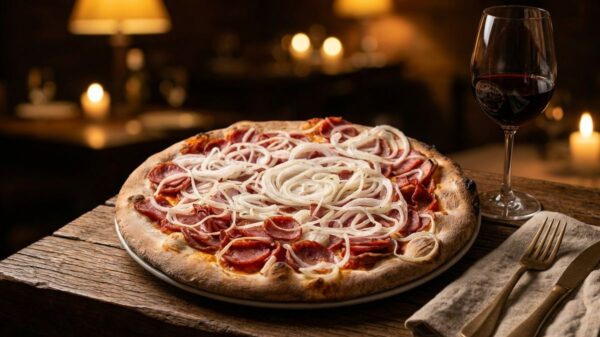
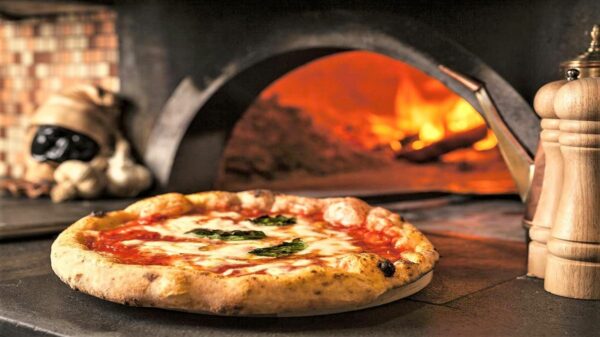








The star ingredient responsible for airy, bubbly pizza dough is yeast. Like cells that eat sugar and convert it to carbon dioxide, yeast is what makes dough rise – but Italian scientists have found a way to make it pizza dough without her.
Because of a severe yeast allergy, Italian materials scientist Ernesto Di Maio can't eat traditional pizza, which is hard to avoid while living in the birthplace of this iconic dish. So he embarked on a journey to make a Neapolitan pizza dough that would grow without the help of yeast. The results of the culinary and physical experiment were published Tuesday (22) in the scientific journal Physics of fluids.
“The invention is based on a deep understanding of what is happening while cooking,” Di Maio, lead author of the study and associate professor of materials science at the University of Naples Federico II, said in an email. “We had fun in the lab.”
The research team, which included a chemical engineer and a PhD student working as pizzaiolo (pizza chef), used simple ingredients – tap water, iodized sea salt and flour – and processes to prepare yeast dough and yeast-free dough, so they could compare the two. They even used a time-lapse photography setup to see how the rising process affected the final structure of sourdough and unleavened dough.
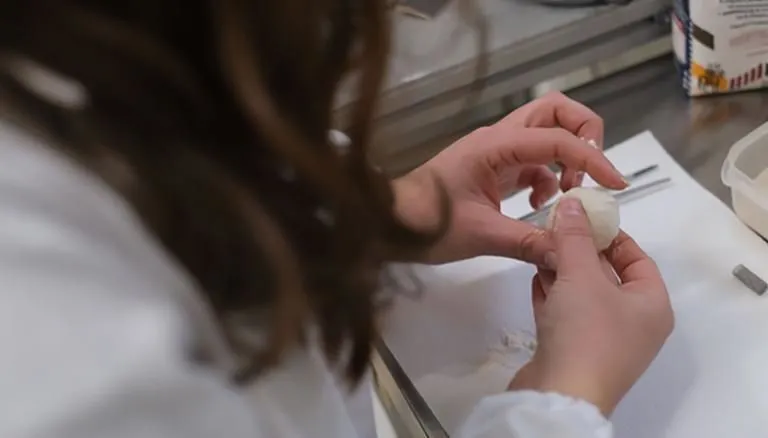
They measured that the fermented dough became more elastic and grew in area by about 20%, while the other dough barely changed over time and slightly decreased in area.
The researchers' previous experience proved to be fundamental in compensating for the absence of yeast. Di Maio studied how bubbles form in polymers, including polyurethane, which is used as a component of paints, varnishes, adhesives and foams. He knew that both bread and polyurethane are formed after two simultaneous processes.
For polyurethane, foaming involves the use of an autoclave, a closed industrial device typically used to sterilize objects by killing bacteria, viruses, fungi, or spores. By using autoclaves, scientists can tinker with pressure and temperature levels to achieve what they want. Polyurethane foam also requires a blowing agent, an initially liquid substance that aids the process.
Knowing this, Di Maio thought about introducing this technique to baking, in a process also similar to that used to make soda ash, according to a press release.
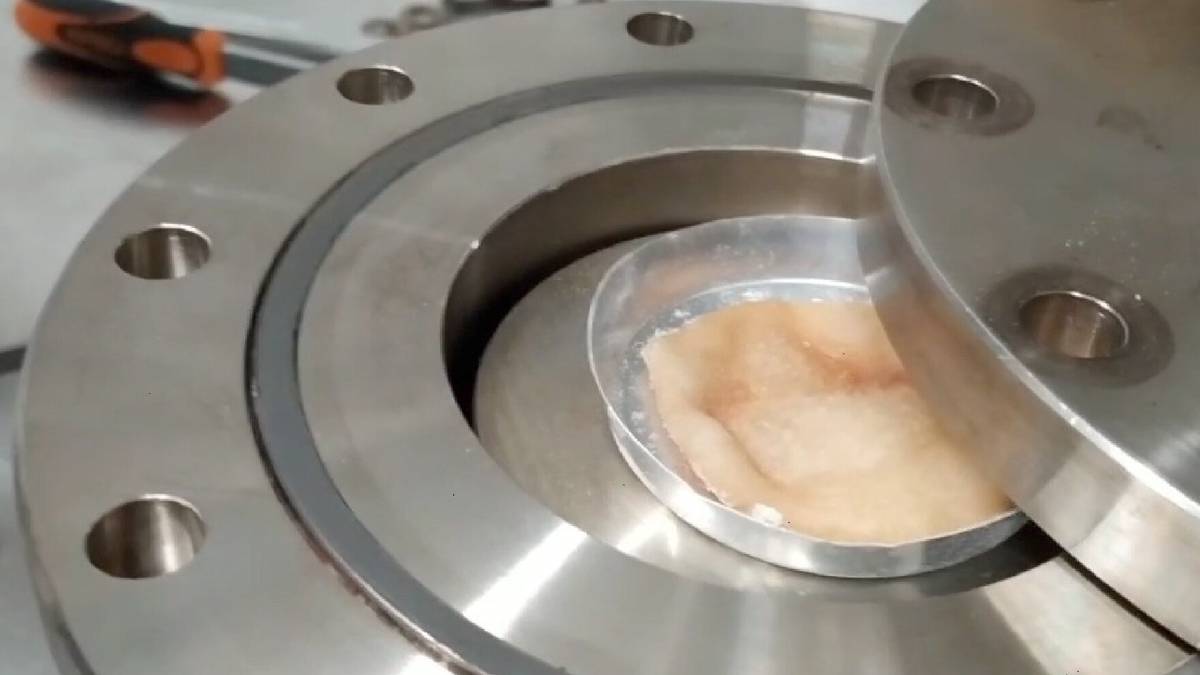
The researchers placed a small yeast-free pizza dough, the size of a penny, in a hot autoclave. Over the course of a few minutes, they changed the pressure levels up and down while dissolving the gas in the dough at high pressure levels. As pressure was slowly released from the autoclave, bubbles formed in the dough.
The final consistency of the dough was similar to that of a traditional dough made with yeast, the study authors said.
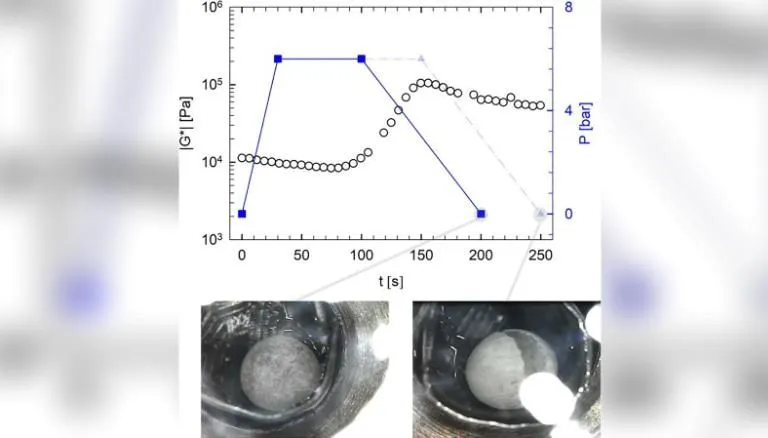
“The key to the process is engineering the rate of pressure release so as not to stress the dough, which likes to expand gently,” Di Maio said in a press release.
“We mainly studied how dough behaves with and without yeast – how softness changes with fermentation (rising) and how dough responds to a temperature program during baking,” said Rossana Pasquino, co-author of the study, in a statement to press. “This was key to designing the pressing protocol for yeast-free dough.”
Because the authors were making the bubbles form slowly, they were not as uniform as bubbles would be in a sourdough.
Unfortunately, “the project is very immature,” Di Maio said — so you can't try this at home yet unless you have an autoclave and a way to blow gas into pizza dough. But as someone with a yeast allergy, Di Maio hopes the new method can be used for other fermented foods, like cakes, in the future, “helping people enjoy healthy, tasty foods,” he said.
“We will now begin a full-scale pizza study on laboratory equipment that should be ready in a few months. After that, depending on the results, we would consider selling the idea to companies”, added Di Maio. “I think two years would be enough, if everything works out and good people get involved.”
FOLLOW-US