


































The approval in the Italian Senate of the bill restricting the right to Italian citizenship by descent has provoked a direct confrontation between Ricardo Merlo, president of the MAIE party – Movimento Associativo Italiani all'Estero – and the deputy Fabio Porta (PD). Both exchanged accusations after the vote that took place on May 15.
Merlo blamed the absence of left-wing senators for the progress of the text, which was approved with a 44-vote advantage. “In the vote on the decree that greatly limits our ability to pass on citizenship to our descendants, the center-left was largely absent,” he said in a video posted on his social media.
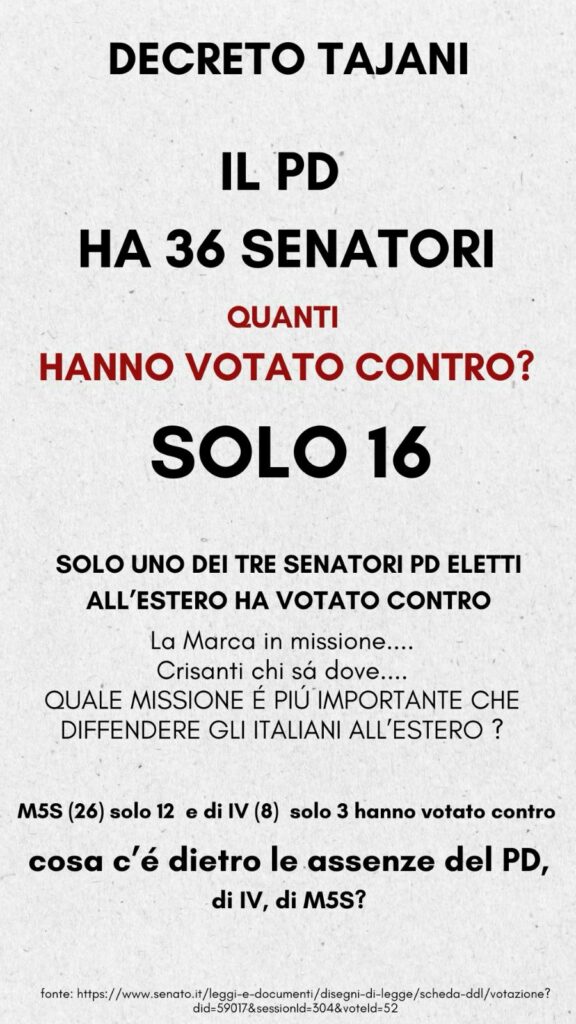
According to him, only 16 of the 36 Democratic Party senators participated. Among the three senators elected abroad, two were absent — including Francesca La Marca, representative of North America, who “was on a mission”. “What more important mission was there than to be there to vote that day?”, asked Merlo. “If they had been present and voted with us, the decree would not have passed. The truth is a great disappointment”.
Merlo also raised suspicions about the behind-the-scenes nature of the vote. “It is legitimate to suspect some kind of agreement. Why didn’t the left participate in the majority in the vote that limits us so much?” he said.

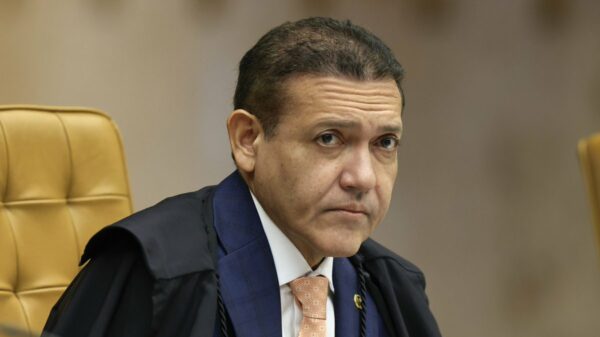
The Supreme Court reaffirmed: citizenship is born with the person.
- New legal front opened
- Processes can still be filed.
- Individual assessment before any decision.
Porta responds and denies opposition influence
Merlo's statements were quickly refuted by Fabio Porta, a Democratic Party deputy elected for South America. For him, the numbers show that absences were not decisive. "The decree was approved with a difference of 44 votes among 118 voters. Even if the absentees from the PD had voted, the result would not have changed," he explained.
Porta stressed that the government has control over the legislative process. “The Executive knows exactly what the situation is in the plenary. If there is a risk of defeat, it always finds members of parliament from its own base to guarantee a majority.”
In a critical tone, the deputy called for accountability. “These calculations have been made before and do not reflect reality. Furthermore, absences due to official missions or health problems are normal and generally balanced between the opposition and the majority.”
Porta also mentioned his own history of attendance. “For years, I have been one of the most present parliamentarians among those elected abroad,” he said.
Absences go beyond the PD and include other opposition parties
Merlo's questioning was not limited to the Democratic Party. In a publication circulated among representatives of the Italian community abroad, it is highlighted that of the 36 PD senators, only 16 voted against the decree. The criticism also extends to other opposition parties.
According to the data, only 12 of the 26 senators from the 5 Star Movement (M5S) and 3 of the 8 from Italia Viva (IV) participated in the vote against the decree. The publication raises questions: “What is behind the absences of the PD, IV, and M5S?”
The poster also mentions by name the absent senators elected abroad. “La Marca on a mission… Crisanti, who knows where… What mission is more important than defending Italians abroad?”, reads the text, referring to Senator Francesca La Marca (PD – North America) and Senator Andrea Crisanti (PD – Europe).
Understand what changes in Italian citizenship
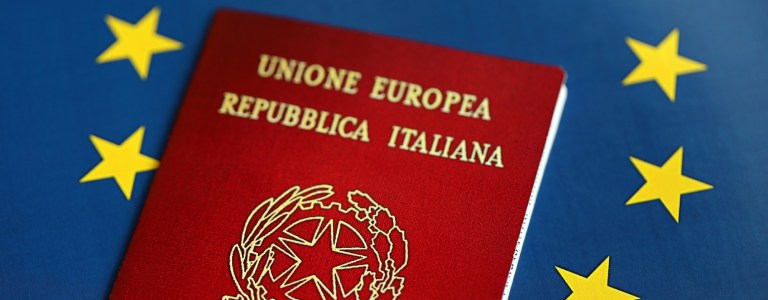
On Thursday (15), the Italian Senate approved the text of the Decree-Law 36The bill, which alters the criteria for recognizing Italian citizenship by descent, passed with 81 votes in favor and 37 against.
In practice, the new text establishes that only people with at least one parent or grandparent born in Italy will be able to apply for citizenship.
Previously, there was no generation limit: it was enough to prove a link with an ancestor born in Italy after March 1861 — the date of the country's unification — to be entitled to recognition.
The decree has been in effect since March 28, but still needs to be approved by the Chamber of Deputies. The process in the Chamber is scheduled to begin this Monday, May 19. The vote is expected to take place next Tuesday. There is an expectation of a possible change in the final text.