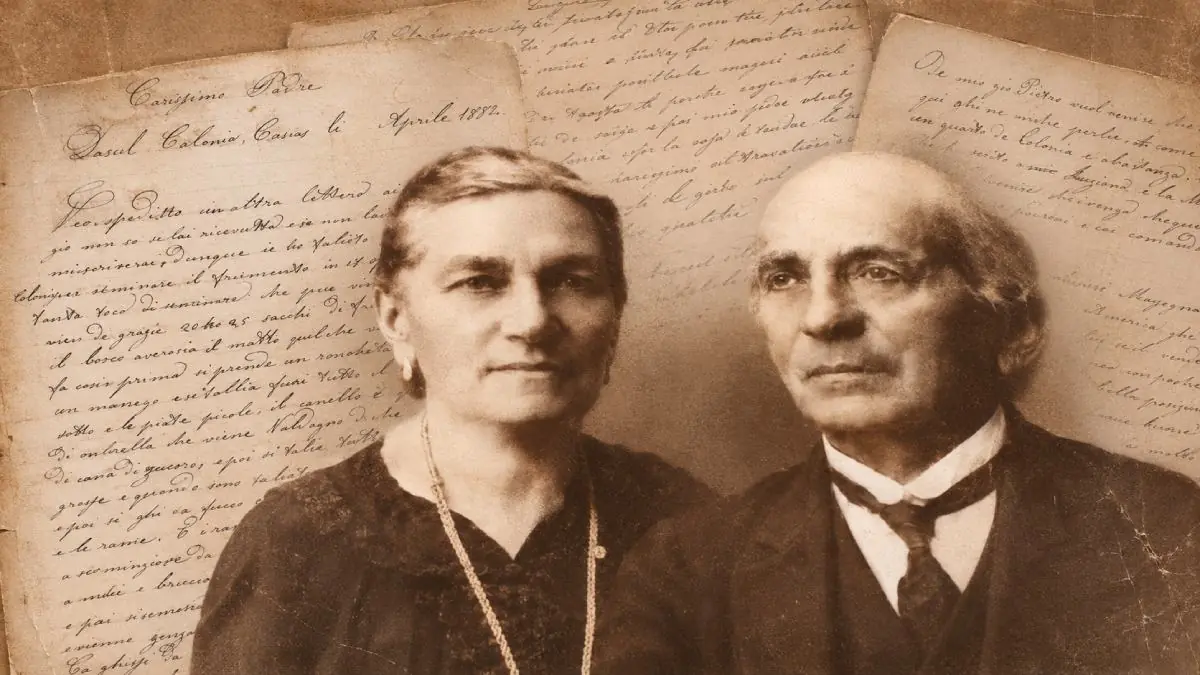
Colônia Caxias, Rio Grande do Sul, April 24, 1884. In a letter sent to his father in Italy, immigrant Paolo Rossato summed up in a few words the change he hoped to have achieved in Brazil: ‘la eravamo servi e qui sia padroni.’ In English: ‘There we were servants, and here we are masters.’
Rossato was 29 and had been in Brazil for just over three months. He had already acquired a property in the colonial region of Caxias, was working on road construction and planned to bring over his parents, siblings and other relatives who had remained in Italy.
The correspondence reveals an experience different from the stories of suffering and regret that also marked Italian immigration. For Rossato, Brazil represented the possibility of leaving behind the status of a subordinate worker and acquiring land of his own.
This is another story from Letters from America, Italianismo’s series dedicated to the correspondence of Italians who emigrated to Brazil.
A Venetian on his way south
A native of Valdagno, in the province of Vicenza, in the Veneto region, Paolo Rossato left for Brazil in the final months of 1883, accompanied by his wife, Raquel Massignani, 23, and other acquaintances.
His parents, siblings and part of the family remained in Italy.
The first known letter was written on December 27, 1883, in São Sebastião do Caí. Rossato arrived in the Caxias region on January 1, 1884.
In his first letters, he described the journey, the conditions he found in Brazil and job opportunities. He also sought to reassure his family, insisting that there were conditions to build a new life on the other side of the Atlantic.
The purchase of the homesteads
On February 17, 1884, Rossato informed his father that he and other members of the group had acquired four rural properties close to one another.
The plots were distributed among different families. The idea was for them to remain neighbors and share job opportunities.
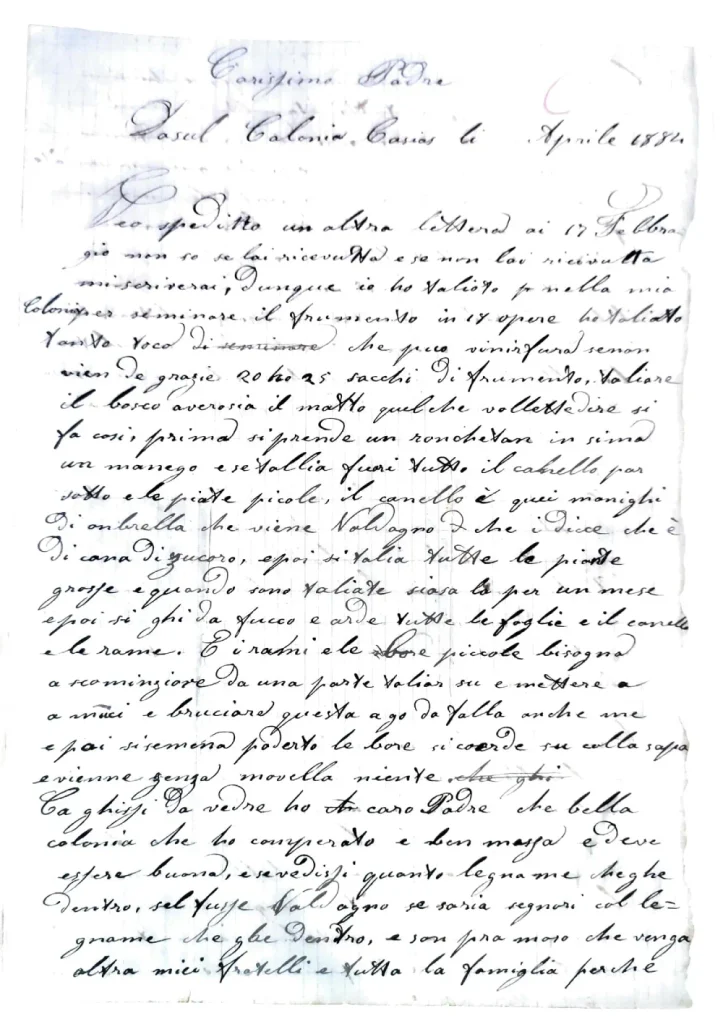
In the April 24 letter, the immigrant described the work needed to prepare his property for wheat cultivation.
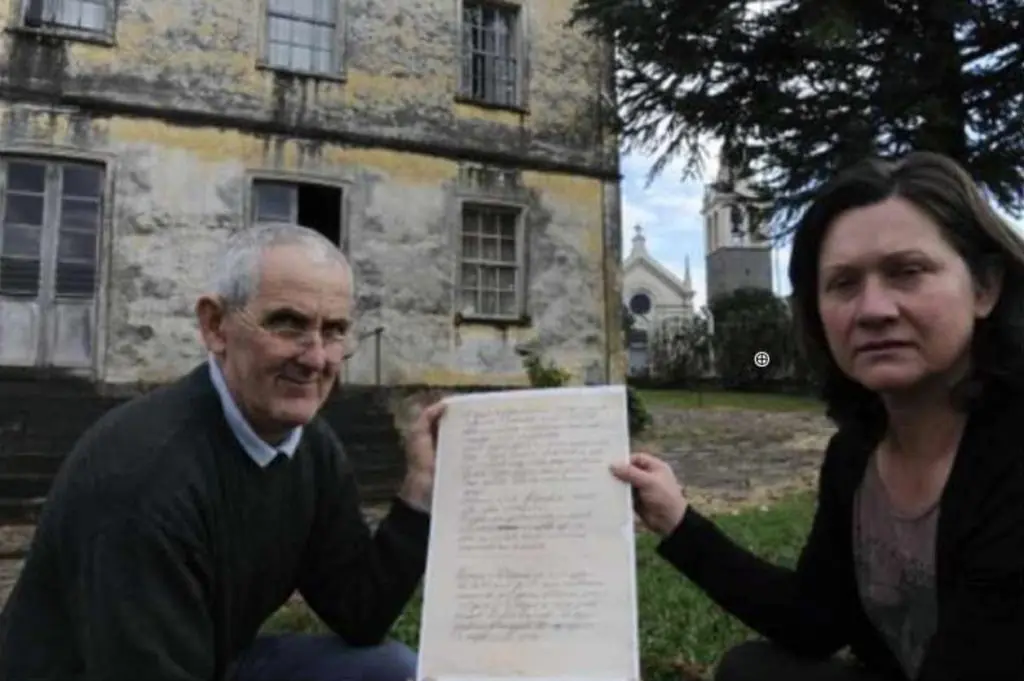
He said he had already cleared part of the vegetation and estimated that he could produce between 20 and 25 sacks of the grain if conditions were favorable.
He also explained to his father how the land was prepared: cutting the vegetation, allowing the material to dry and then burning it to make room for planting.
The amount of available wood impressed Rossato. In the letter, he said that if he had that same amount of wood in Valdagno, he would be rich.
It was in this context that he wrote the phrase that gives this report its title: In Italy they were servants; in Brazil, they would be masters.
Work and plans for the family
The property was not his only source of income. Rossato also worked in road construction, an activity that offered daily pay.
In the April letter, he explained that if he had someone to look after the homestead while he worked elsewhere, he could devote three months to road construction and save a significant amount of money.
The correspondence also mentions the need for help with the sorghum harvest, scheduled for August, and with the construction of the family’s house.
The plans depended on the arrival of other relatives. Rossato wanted his father and one other family member to remain on the property, while other members of the group would work on the roads.
The project was to organize agricultural production and take advantage of the job opportunities available in the region.
An invitation to cross the Atlantic
Rossato’s letters were not merely accounts of life in Brazil. They also served as tools of persuasion.
He urged his parents, siblings, uncles and other acquaintances to leave Italy.
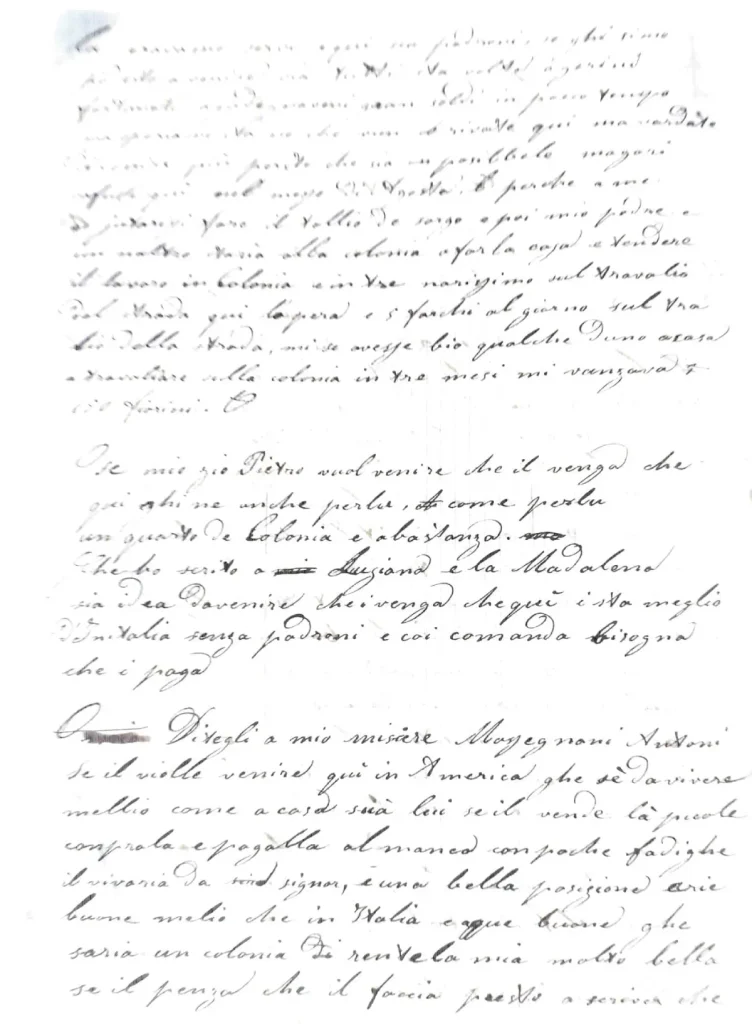
He offered his uncle Pietro the possibility of acquiring a smaller portion of a property. He also looked for nearby plots for other family members and asked his relatives to make a decision quickly.
In later correspondence, he even recommended the Raggio Maritime Transport Company, of Genoa, to help organize the journey. He advised family members to negotiate directly with the company and avoid intermediaries who might charge higher amounts.
The goal was to turn one immigrant’s experience into a family project.
After about a year of preparation, Rossato’s parents and other children arrived in the colonial region in January 1885. They brought with them the letters sent by their son, which also served to prove that they had relatives waiting for them in Brazil.
What happened next?
Paolo Rossato’s known correspondence does not end in June 1885.
According to research by historian Ana Paula Soares, he continued writing to family members. One of the last recorded letters was sent to his father from Cachoeira on December 25, 1885.
In it, Rossato said that he had tried to work in a coal mine but ended up employed in Cachoeira. He reported that he earned 1 mil-réis a day and was well settled, with food and lodging.
The move to Brazil, therefore, did not mean a path without difficulties. The immigrant continued to depend on work and travel to secure his family’s income.
Researcher Maíra Ines Vendrame analyzes Rossato’s correspondence as an example of the family networks that sustained Italian emigration. The letters made it possible to share information, organize journeys, negotiate properties and bring together relatives separated by the ocean.
Rossato’s experience shows how immigration could be planned collectively. First, one member of the family would leave. Then, through letters, that person sought to create the conditions for the arrival of the others.
For him, America was not merely a destination. It was the possibility of changing his social position and building a life around his own land.
—
Letters from America is Italianismo’s Sunday series dedicated to letters, diaries and correspondence left by Italians who emigrated to Brazil and other countries in the Americas.
Also read:
- “We have to work to live”: The 1885 letter that reveals an Italian family’s struggle in Brazil
- “Perhaps fortune awaits me far away”: The letters of the Italian who left Parma for Brazil in 1908
- “With my heart squeezed as if in a vise”: The diary of an Italian on his way to Brazil in 1911
- ‘I cried all night’: The letter of an Italian who blamed himself for bringing his children to Brazil in 1889
Newsletter
Últimas do Italianismo
Todo dia, às 18h, um resumo do que aconteceu na Itália direto no seu e-mail.
É gratuito e você cancela quando quiser.