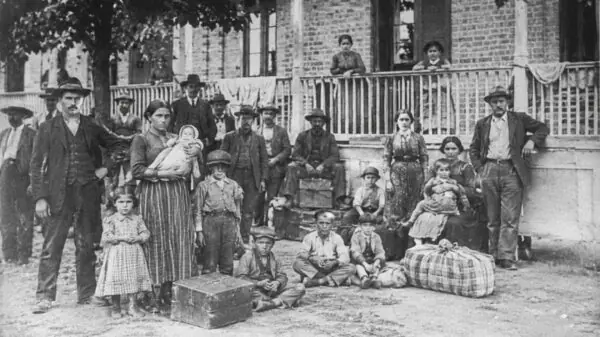
Venetian immigrants took part in São Paulo’s economic expansion, worked on coffee plantations and contributed to the growth of cities. But over the generations, many of their descendants lost contact with the language, traditions and regional identity of their ancestors.
That is what Luís Felipe Mattiuzzo argues in an article published on the Third Venetia platform, titled From San Marco to São Paulo: Dissolution of Venetian Identity in Brazil’s Greatest State.
The author analyzes why Venetian identity weakened in São Paulo, while Italian immigrant communities in southern Brazil were able to preserve part of their linguistic and cultural traditions.
For Mattiuzzo, the phenomenon cannot be explained solely by the natural assimilation of immigrants. São Paulo’s economic model, the dispersal of families, urbanization and Brazilian nationalist policies helped accelerate the process.
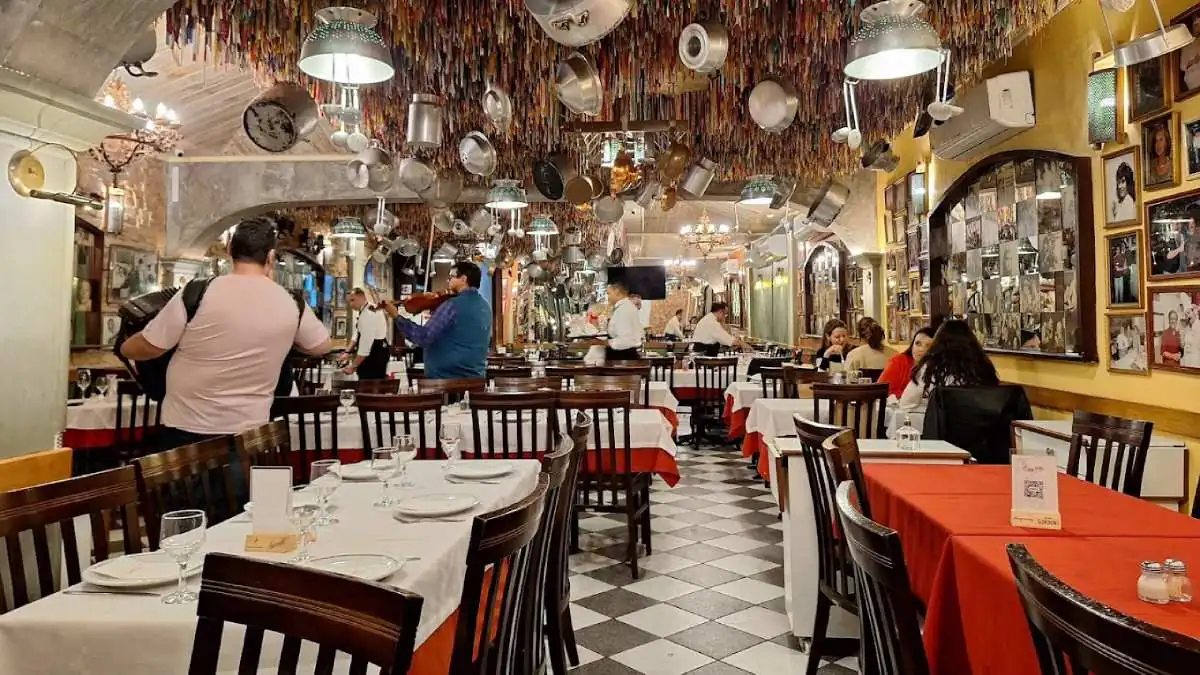
The result, he says, was the gradual replacement of Venetian regional identity with a broader Italian identity, often associated with surnames, cuisine and traditional festivals.
Venetian immigration and São Paulo coffee
The arrival of Italians in São Paulo intensified in the final decades of the 19th century, alongside the expansion of coffee cultivation and the need for workers on large rural estates.
Immigration was encouraged by plantation owners and provincial authorities, who financed travel and organized the recruitment of European families. Among those who arrived were thousands of Venetians, from a predominantly agricultural region in northeastern Italy.
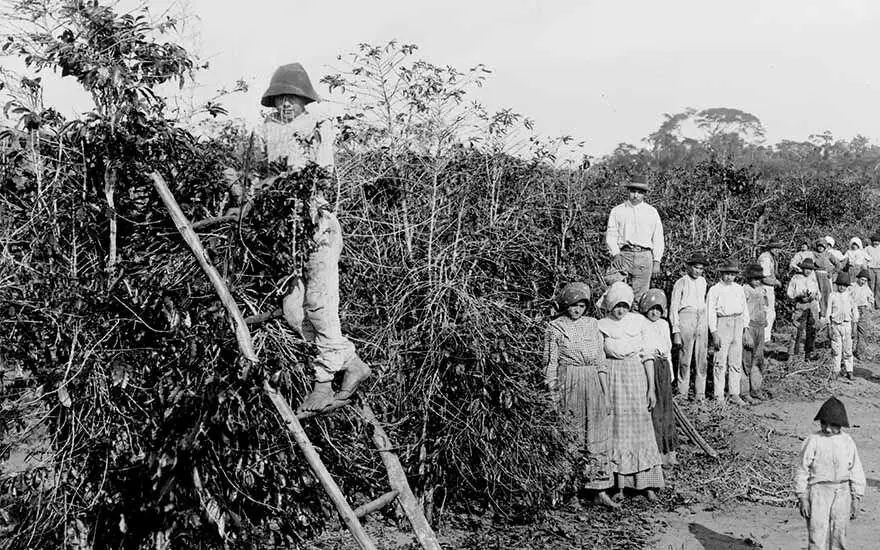
São Paulo’s model differed from that of Italian settlement areas in Rio Grande do Sul and Santa Catarina. In parts of the South, immigrant families received plots of land and established rural communities with relative autonomy. In São Paulo, a large share of newcomers was sent to coffee plantations, where they worked under the control of landowners.
According to Mattiuzzo, this structure made it difficult to form communities capable of preserving their own institutions, customs and linguistic ties.
Venetian immigration in São Paulo was “numerous, but dispersed; intense, but culturally fragile,” the author writes, describing the contradiction between immigrants’ economic importance and the difficulty of preserving their identity.
The central argument is that São Paulo received Europeans primarily as labor, without developing a settlement model aimed at ensuring the continuity of their communities of origin.
The isolation of families on plantations
The article identifies two distinct processes of cultural assimilation. In São Paulo’s interior, the dispersal of workers across large estates made it difficult to form autonomous communities. In the capital, urban growth and contact among different immigrant groups encouraged the adoption of Portuguese.
To explain the situation of rural workers, Mattiuzzo uses the expression “isolation without autonomy.”
The phrase sums up one of the differences he identifies between São Paulo plantations and certain agricultural colonies in the South. Although many families lived in rural areas, isolation did not mean economic independence or freedom to organize community institutions.
The author argues that dependence on plantation owners and the absence of their own educational and social structures contributed to weakening cultural transmission between generations. This interpretation does not rule out the existence of Italian associations, solidarity networks and cultural initiatives in São Paulo state.
How the Venetian language lost ground
Many Italians who arrived in Brazil at the end of the 19th century did not use standardized Italian in their daily lives. They spoke regional languages and varieties, including Venetian.
In São Paulo, the need to communicate at work, children’s schooling and interaction among people of different origins encouraged the spread of Portuguese. According to Mattiuzzo, the first generation maintained its native language mainly within the family. In later generations, its use became increasingly restricted.
The author argues that many descendants came to identify only as Italian, without specific knowledge of the region, language or traditions of their ancestors. Linguistic loss, however, did not occur uniformly. The transmission of immigrant languages varied among families, localities and historical periods.
The Estado Novo and cultural repression
Nationalist policies adopted during the government of Getúlio Vargas helped restrict the public use of immigrant languages. During the Estado Novo, from 1937 to 1945, nationalization measures affected schools, associations and publications linked to foreign communities.
Decree-Law No. 406, of May 4, 1938, required instruction in rural schools to be taught in Portuguese. Restrictions intensified during a period of growing nationalism and, later, tensions caused by World War II.
For Mattiuzzo, state intervention deepened an assimilation process already underway. Repression of foreign languages, however, does not by itself explain the weakening of Venetian identity. Economic transformations, social mobility and changes within families also played a role in the process.
Why did the South preserve more traditions?
The contrast with southern Brazil is one of the article’s main arguments. In certain Italian settlement regions of Rio Grande do Sul and Santa Catarina, the concentration of families from nearby localities encouraged the continuity of linguistic and religious practices.
One of the best-known examples is Talian, an immigrant language formed in Brazil through contact between linguistic varieties from northern Italy, mainly Venetian-based varieties, and Portuguese.
In 2014, Talian received the designation of Brazilian Cultural Reference, after being included in the National Inventory of Linguistic Diversity, coordinated by the National Institute of Historic and Artistic Heritage (Iphan).
This does not mean that all southern communities retained their languages or that Venetian culture disappeared entirely from São Paulo. The article itself acknowledges the persistence of customs, family practices and cultural references of Venetian origin in São Paulo society.
A significant but little-recognized presence
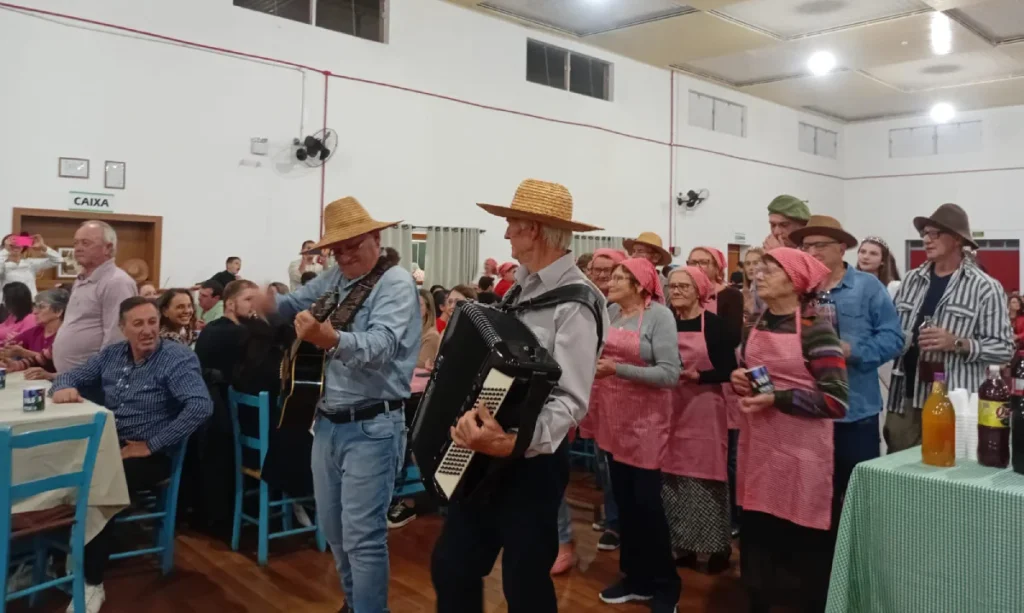
Mattiuzzo identifies a contradiction in the trajectory of Venetian immigrants. Although they took part in São Paulo’s economic and social transformation, their contribution is rarely remembered through their specific regional identity.
The author describes this legacy as “a great presence without collective consciousness.” The phrase sums up his assessment that a significant share of descendants know their family’s Italian origins, but not necessarily their Venetian history.
Traces of this heritage can be found in family customs, religious practices, eating habits and linguistic expressions. For Mattiuzzo, however, these isolated manifestations do not amount to the preservation of an organized cultural community with its own language and institutions.
The critique of São Paulo’s Italian identity
In the article’s most forceful section, Mattiuzzo questions the way Italian identity is often presented in São Paulo. According to him, ties with Italy have come to be represented by generic symbols, especially traditional dishes, festivals and references to the nationality of ancestors.
The author believes this representation can obscure important historical differences among immigrants’ various regions of origin. Venetians, as well as Lombards, Piedmontese, Calabrians and other groups, had their own linguistic and cultural traditions.
In Mattiuzzo’s assessment, the transformation of these identities into a single Italian identity helped weaken regional memory. This critique expresses the author’s perspective. The formation of an Italian-Brazilian culture can also be understood as a process of creating new traditions, resulting from the encounter among different groups and generations.
When citizenship replaces family memory
One of the article’s most direct criticisms concerns the pursuit of Italian citizenship among descendants of immigrants. Mattiuzzo questions situations in which ancestry comes to be valued almost exclusively for the practical advantages of citizenship recognition, without a corresponding interest in family history.
In this context, the author writes, origin ceases to be understood as a historical and cultural heritage and becomes “a mere resource for personal benefit.”
The criticism is not directed at the right to citizenship itself, but at what Mattiuzzo considers a utilitarian relationship with ancestry. For him, recovering Venetian identity requires more than genealogical documents or legal recognition of descent.
It also involves knowing the places of origin, studying the language and preserving the experiences passed down by ancestors.
Can Venetian memory be recovered?
Despite presenting a critical assessment of cultural assimilation in São Paulo, Mattiuzzo argues that recovering Venetian memory is possible. Among the proposed paths are studying regional history, valuing customs and encouraging knowledge of the language.
The author also considers it important to bring Brazilian descendants closer to communities that still preserve Venetian traditions, both in Italy and in southern Brazil. The proposal does not assume a complete reconstruction of the way of life of 19th-century immigrants, but rather the recovery of cultural references that have weakened over generations.
For descendants who know only their family’s Italian surname, this process can begin by researching the city or village where their ancestors came from.
From this perspective, the history of immigration ceases to be merely the story of Italians who arrived in Brazil and instead reveals the specific experiences of the communities that took part in shaping the country.
Newsletter
Últimas do Italianismo
Todo dia, às 18h, um resumo do que aconteceu na Itália direto no seu e-mail.
É gratuito e você cancela quando quiser.