






























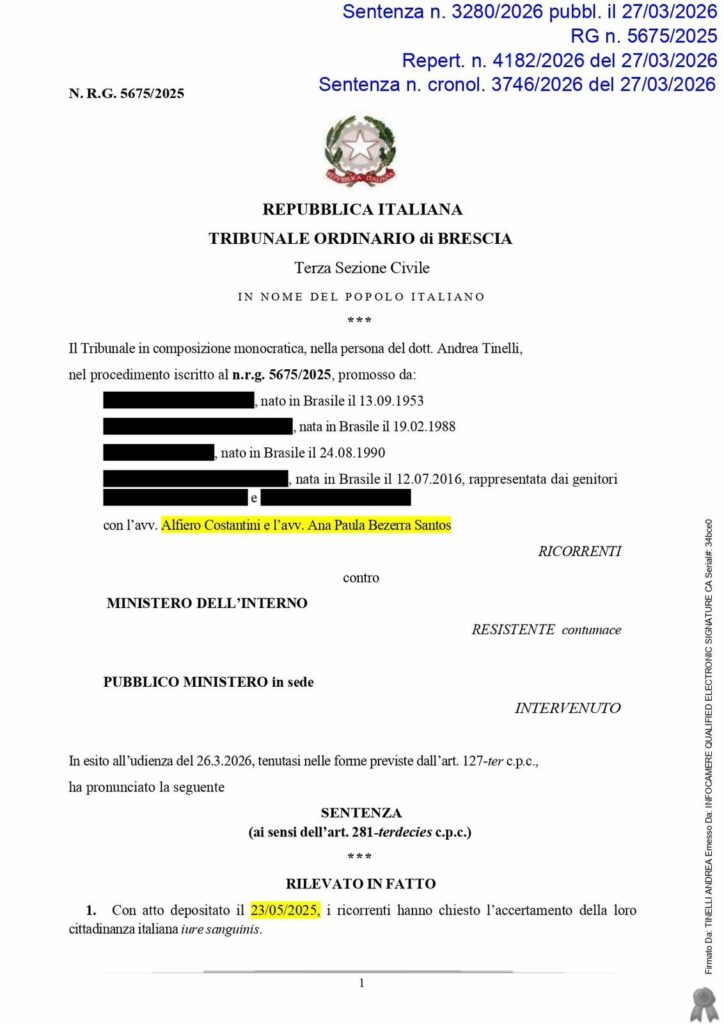
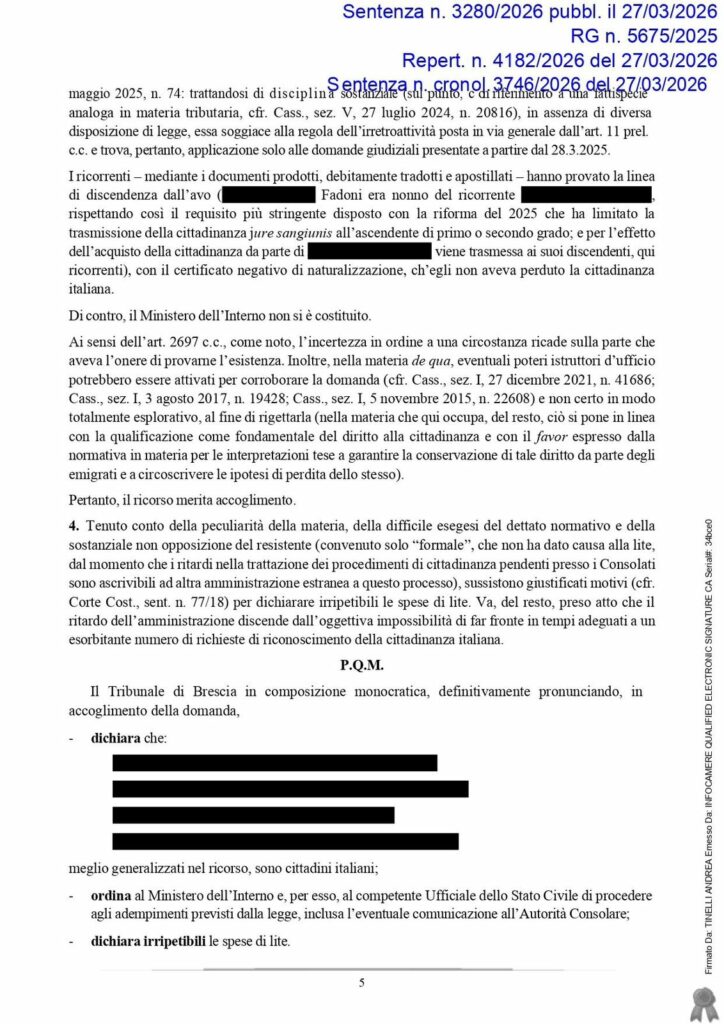
The Brescia Court recognized the right to Italian citizenship. jure sanguinis for a Brazilian family, spanning generations of grandchildren, great-grandchildren and great-great-grandchildrenThe decision, published on March 27, 2026, is a landmark in the interpretation of the legislative reform that took place the previous year.

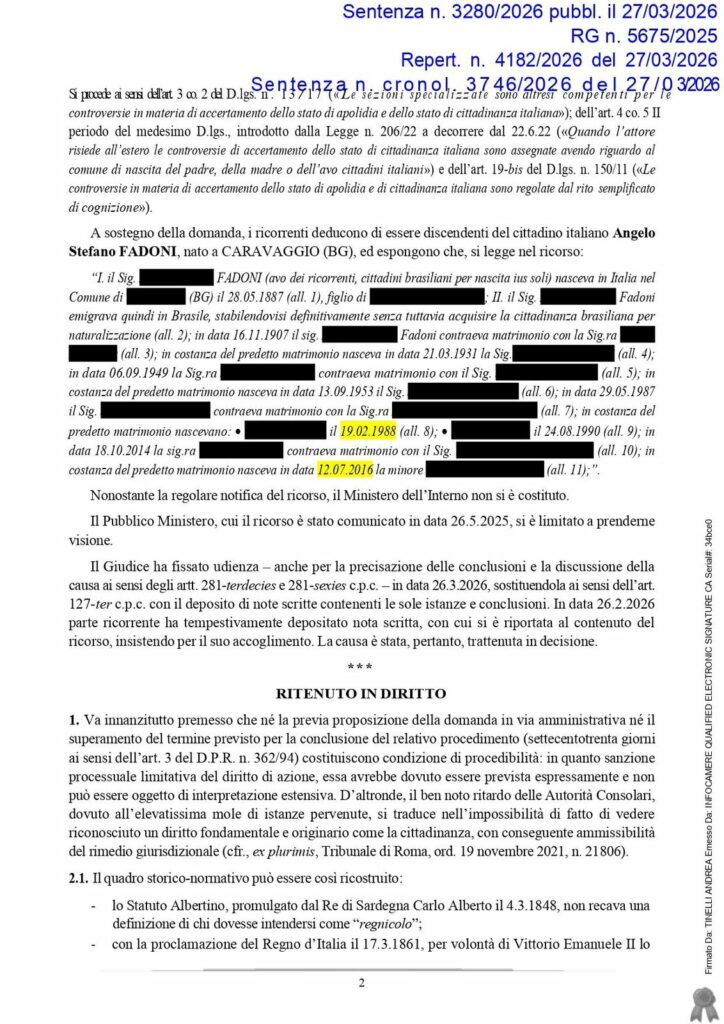
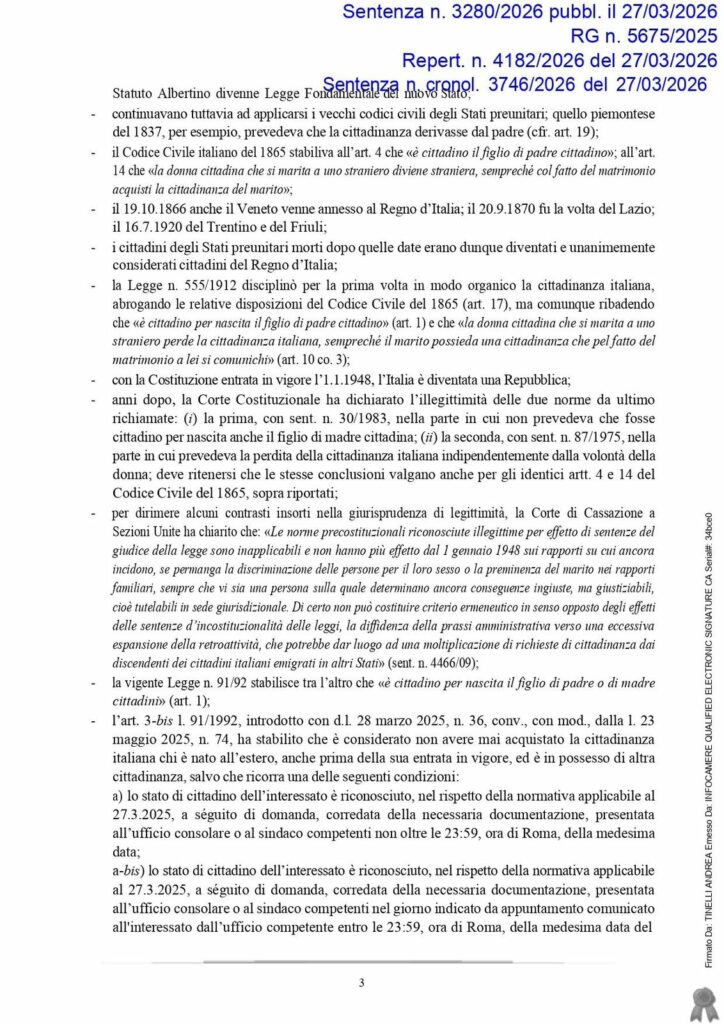
The ruling addressed the application of Article 3-bis of Law 91/1992, introduced by Decree-Law No. 36/2025 (the so-called "Tajani Decree"). The new rule establishes restrictions for those born abroad who hold another nationality, but the court upheld the recognition for the applicants.
The crux of the legal issue
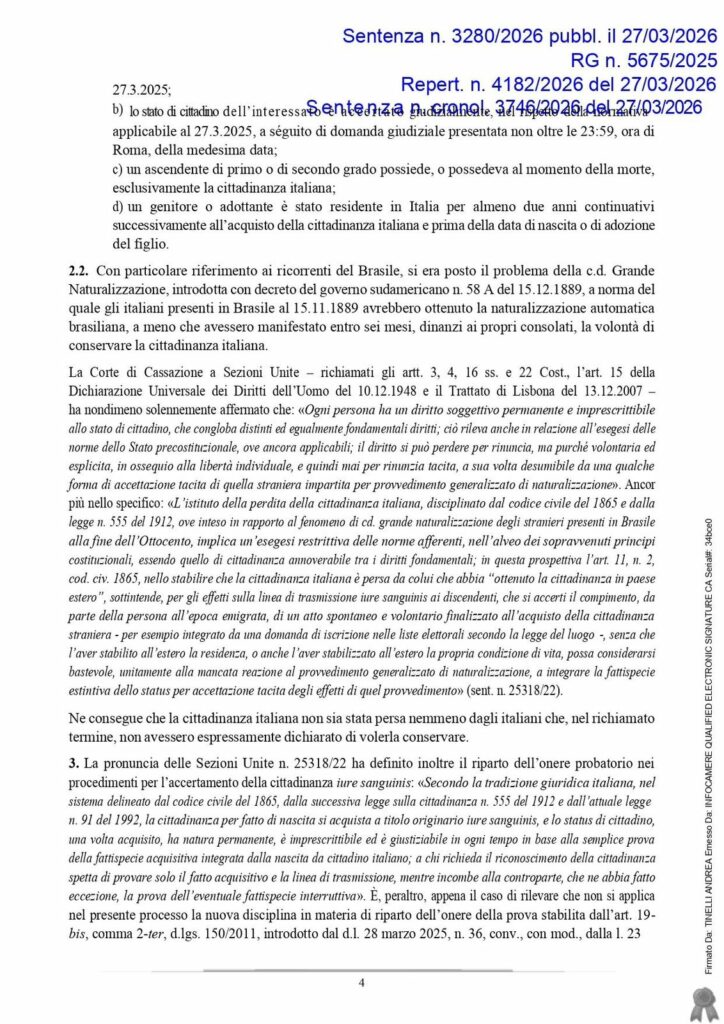
Despite the limitations imposed by the 2025 law, the legal interpretation in this decision prioritized equal status. From this perspective, once the bloodline is proven, the descendant is considered Italian retroactively to birth (from birth).

Thus, the recognition of great-grandchildren and great-great-grandchildren is based on the principle that citizenship is an original right. The place of birth abroad would therefore be a fact that does not have the power to extinguish the transmission of hereditary rights, under penalty of creating distinctions between Italian citizens based on geography.
Constitutional Court decision pending.
The case comes at a time of great legal anticipation within the Italian community abroad. Still A decision from the Constitutional Court is pending. which will assess whether the Tajani Decree and its restrictions on citizenship by descent are legitimately constitutional.
Many experts argue that the 2025 regulation violates fundamental principles of equality and non-retroactivity of laws. Until the Italian Supreme Court rules, ordinary courts continue to analyze cases on a case-by-case basis.
State default and appeal
In the Brescia case, represented by lawyers Alfiero Costantini and Ana Paula Bezerra Santos, Judge Andrea Tinelli highlighted that the lineage was duly proven by translated and apostilled documents. The family descends from an immigrant born in Caravaggio in 1887, who never renounced his original nationality.
The ruling mandated that the Ministry of the Interior and civil registry officials proceed with the registration of all applicants, from the grandchild down to the fifth generation of the family.
It is worth noting that the Ministry of the Interior, represented by the State's legal counsel, did not participate in the proceedings, and was declared in contempt of court. Despite the absence of a defense at this stage, the decision is not yet final and can be appealed by the Italian authorities.
See the decision:



FOLLOW-US