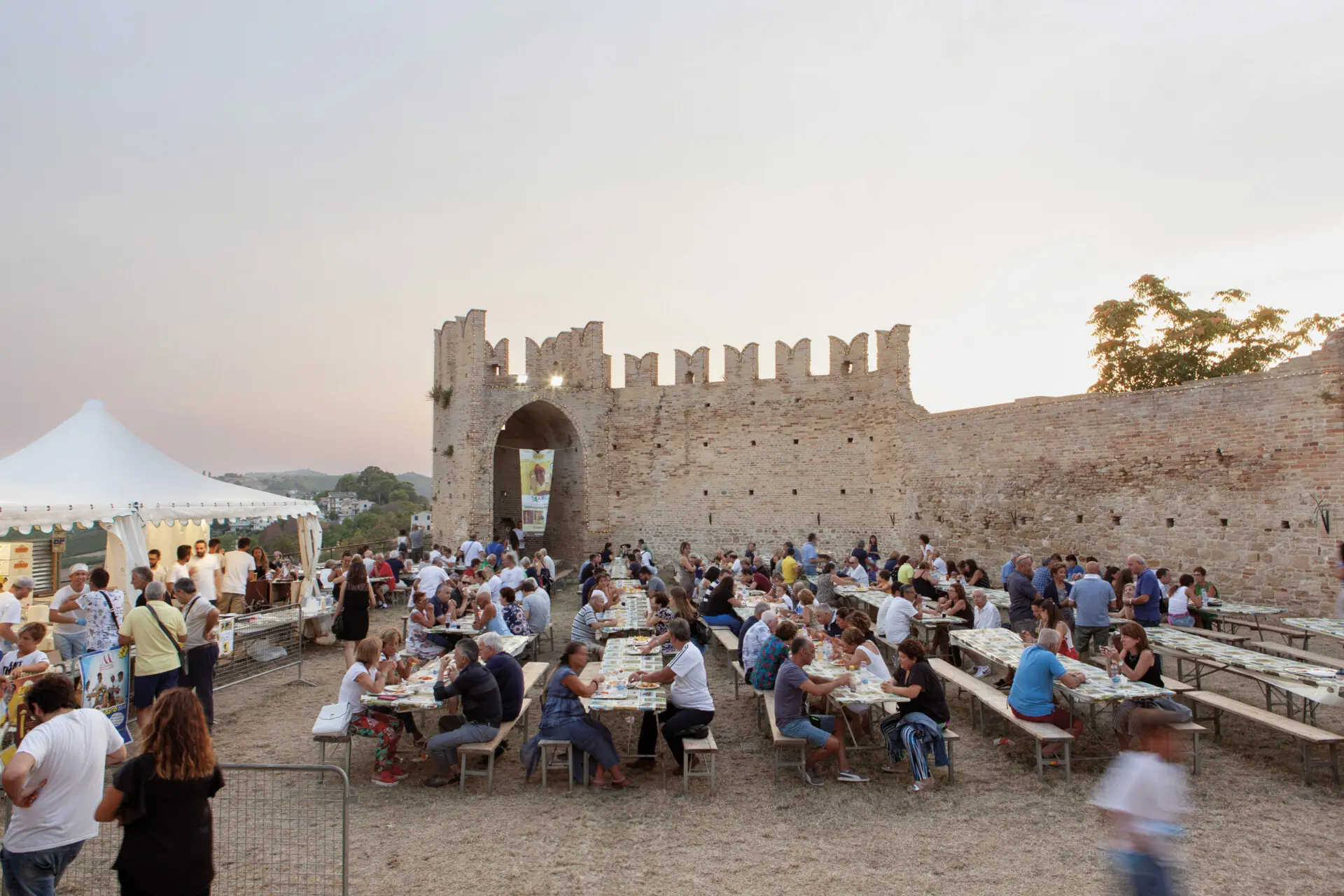
In small Italian towns, a recipe can be reason enough to bring an entire community together. Residents set up tables in town squares, fire up the stoves, prepare traditional dishes and welcome visitors. These are the sagre in Italy, folk festivals where food serves as a link between generations and an expression of local identity.
A sagra may celebrate a variety of chestnut, a type of pasta, the grape harvest or a specialty prepared for decades by the families of a particular village. The idea is not just to offer food to the public, but to preserve culinary practices, strengthen associations and raise the profile of local products.
What is a sagra in Italy?
In Italian, sagra refers to a folk festival tied to a place’s tradition. Many focus on an ingredient or typical dish; others are associated with the religious calendar, agricultural work or community customs. The plural form is sagre.
These gatherings should not be confused with large food festivals organized by companies. Although some sagre have become tourist attractions, many still depend on volunteers and local associations, which cook and serve the public in facilities set up especially for the occasion.
A report by Italy Segreta describes this community-oriented character, with residents working together and, in some cases, event proceeds going to activities and spaces used by the public.
Why does food play a central role in these festivals?
Italian cuisine is deeply regional. The same ingredient can lead to different recipes from one province to another, as shown by Italy’s regional pasta recipes, and many specialties remain associated with a city or village. At sagre, this relationship between food and place becomes clear.
There are celebrations devoted to polenta, truffles, mushrooms, chestnuts, wine, seafood and handmade pasta. The relationship between place and recipe is also present in Italian cities associated with traditional pasta dishes. Italianismo has already gathered examples in a guide to Italy’s traditional food festivals.
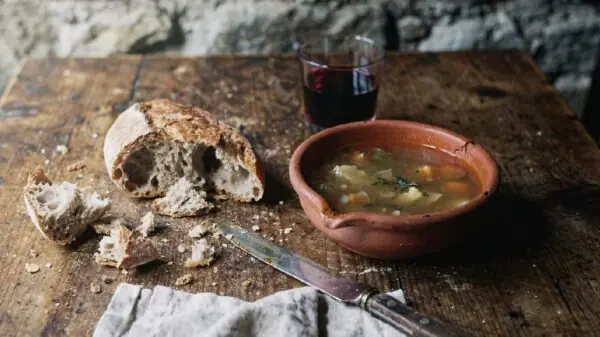
The preparation matters, too. Large pots, recipes passed down within families and collective work are all part of the experience. For many visitors, the opportunity is to taste food made in a home-style way, rather than necessarily finding a dish as elaborate as one from a restaurant.
Who organizes sagre?
In Campofilone, in the Marche region, the Sagra dei Maccheroncini brings residents and visitors together around a traditional local pasta at a festival held in the historic center. Organization varies from municipality to municipality. Cultural associations, groups of residents and organizations called Pro Loco, which promote local areas, are among those responsible. Volunteers commonly take part in setup, cooking and serving.
The collective nature helps explain why a sagra can be important even when it receives few visitors from outside. For residents, it is an occasion to gather, mobilize and maintain shared customs.
Are sagre ancient traditions?
Some have roots in religious and rural celebrations, such as patron saint festivals and harvest periods. Others were created more recently to promote local products or encourage social interaction. Therefore, it is not correct to treat all sagre as medieval events that have remained unchanged.
The history of these festivals itself shows adaptations. Over time, certain celebrations have added stalls, musical performances and tourism promotion, without necessarily eliminating residents’ participation.
The preservation of a food tradition can also be seen outside Italy. In Espírito Santo, for example, the Festa da Polenta of Venda Nova do Imigrante keeps alive cultural references brought by families of Italian descent.
Pacentro and Abruzzo’s pastoral cuisine
In the village of Pacentro, in the Abruzzo region, the Sagra della Pecure allu Cutture is dedicated to sheep meat slowly prepared in large cauldrons. The dish recalls animal husbandry and transhumance, a practice linked to the seasonal movement of herds through pastures.
According to Viaggiando Italia, the recipe is a symbol of local pastoral cuisine.
The example shows how a food can tell part of a locality’s economic and social history. The meaning of the festival goes beyond the dish served: it also lies in the people who preserve the recipe and the public space they occupy together.
How can you experience a sagra during a trip?
Dates vary according to the locality, the season and the organization of each event. Those wishing to take part should check the official channels of municipalities and Pro Loco associations before traveling, rather than relying on old calendars.
It is worth noting whether the festival is dedicated to a typical regional product and whether it involves the local community. This context helps distinguish a traditional celebration from an exclusively commercial event.
To understand other expressions of regional culture, it is also possible to explore initiatives to preserve Italian historical costumes and festivals held by descendants of immigrants, such as the polenta tradition in Brazil.
Ultimately, what distinguishes a sagra is not the size of the festival. It is the connection between a community, its territory and a way of cooking that continues to be shared.
Newsletter
Últimas do Italianismo
Todo dia, às 18h, um resumo do que aconteceu na Itália direto no seu e-mail.
É gratuito e você cancela quando quiser.