Today it is Muslims? Yesterday it was Jews. Who will be next?
The question recalls one of the darkest episodes in European history. In 1938, Benito Mussolini’s Italy turned antisemitism into official state policy. Jewish children were barred from attending schools, teachers lost their jobs, and families began to face legal discrimination because of their origins.
Decades later, a warning from German pastor Martin Niemöller continues to be remembered:
“First they came for the socialists, and I said nothing, because I was not a socialist. Then they came for the trade unionists, and I said nothing, because I was not a trade unionist. Then they came for the Jews, and I said nothing, because I was not a Jew. Then they came for me. And there was no one left to speak for me.”
The statement became known as “First they came …” Niemöller, who initially sympathized with Nazi ideas, later became an opponent of Adolf Hitler and was imprisoned by the regime.
The phrase has no single, definitive original version. The pastor used it in postwar speeches, with different references to the persecuted groups. Its message, however, remained: silence in the face of the persecution of others can leave all of society vulnerable.
That is why the history of the Italian racial laws of 1938 deserves to be remembered at a time when the country is once again discussing policies of separation and integration in schools.
1938: Mussolini barred Jews from studying
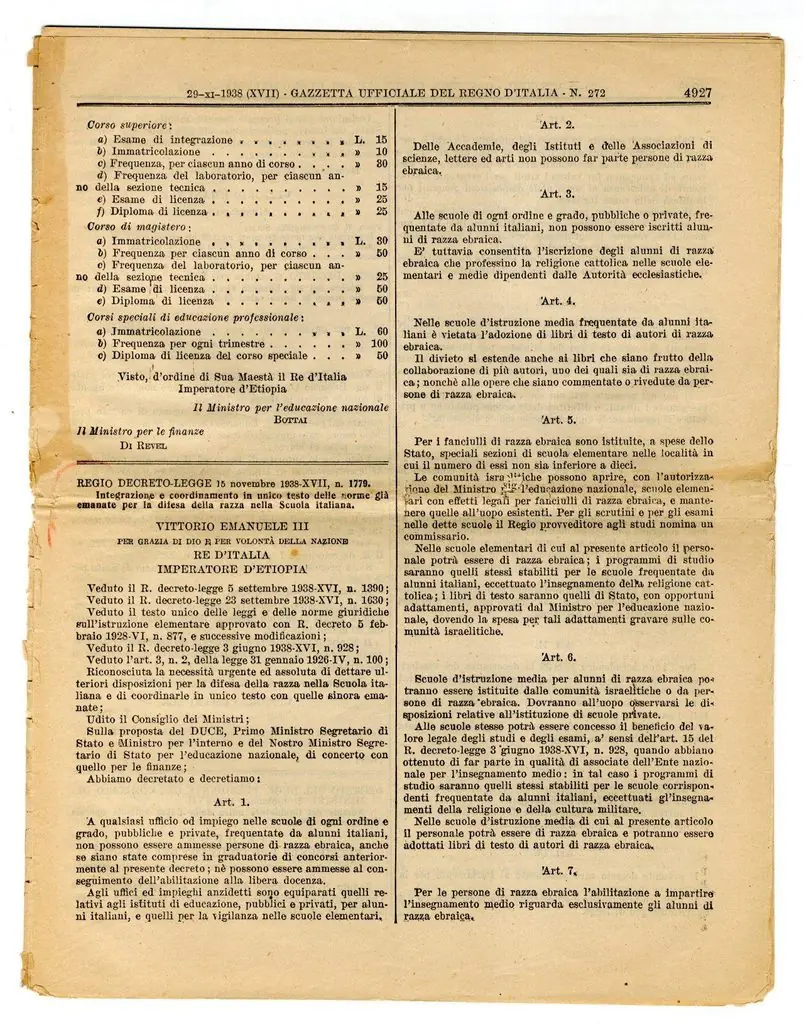
On Sept. 5, 1938, Royal Decree No. 1390 was signed, titled Provvedimenti per la difesa della razza nella scuola fascista, or Measures for the Defense of the Race in Fascist Schools.
The document was signed by King Vittorio Emanuele III under the government of Benito Mussolini.
Article 1 barred people classified as Jewish from serving as teachers in public schools and in private institutions recognized by the state. It also affected academic activities, such as university assistance.
Article 2 was explicit: Jewish students could not be enrolled in schools at any level whose studies had legal recognition.
The legislative vote took effect on Sept. 13 of that year.
It did not matter whether the child had been born in Italy, spoke Italian, had Italian friends or had attended the same school for years. Jewish origin became sufficient to determine their exclusion.
The measure had nothing to do with academic performance, language proficiency or learning difficulties. It was institutionalized racial discrimination.
Jewish children were separated from other students
The persecution advanced quickly.
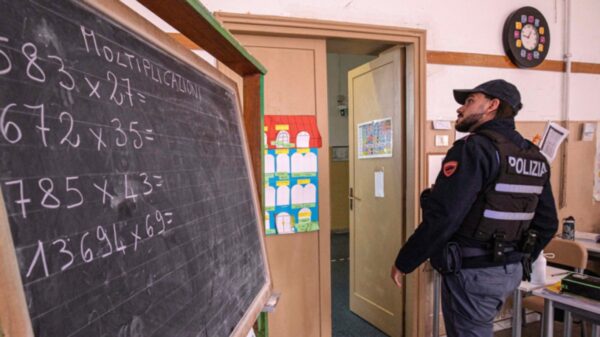
On Sept. 23, 1938, the government issued Royal Decree-Law No. 1630, which ordered the creation of special elementary school sections for Jewish children in municipalities where there were at least 10 students in that condition.
In practice, children were removed from regular school life and sent to separate classes.
The racial laws also affected universities, cultural institutions, professions and different areas of public life.
Italy’s Jewish community had a historical presence of more than 2,000 years on the peninsula. Many Jews were Italian citizens, participated in cultural and economic life and were deeply integrated into society.
Even so, the regime began classifying them as a separate group whose rights could be denied.
School exclusion was part of a broader process of persecution that, in the following years, worsened with Italian collaboration in the deportations of Jews during the Nazi occupation.
Martin Niemöller’s warning
Martin Niemöller (1892-1984) was a German Lutheran pastor. He initially sympathized with Nazism and far-right nationalist movements.
His opposition to the regime grew when Hitler began interfering in the organization of Protestant churches.
In 1937, Niemöller was arrested by the Gestapo. He remained imprisoned until the end of the war in 1945, passing through prisons and concentration camps.
After the Nazi defeat, he began speaking about Germans’ responsibility in the face of the persecution carried out by the regime.
In his speeches, he acknowledged that he and other members of society had remained silent while specific groups were persecuted.
The United States Holocaust Memorial Museum records different versions of the statement, which Niemöller used in postwar speeches.
The meaning of the message, however, remained the same: when society accepts the persecution of people because it believes the problem does not concern it, it contributes to the advance of injustice.
2026: Italy once again discusses the presence of foreigners in schools
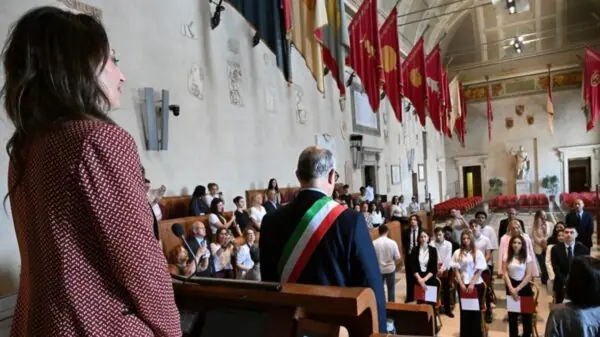
On Nov. 19, 2026, the Italian Senate approved the bill converting Decree-Law No. 170/2026, presented by the government of Prime Minister Giorgia Meloni.
The text establishes a 30% limit for certain students without Italian citizenship in entry-level classes, considering criteria related to origin and educational background.
The rule is to be applied beginning with the 2027/2028 school year.
The government argues that the concentration of students with language difficulties can hinder learning and that distribution among schools would help improve integration.
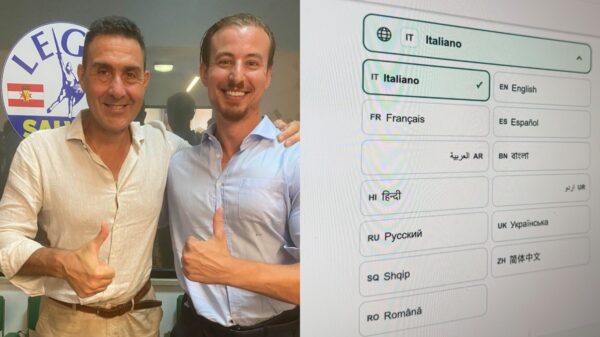
The package also provides Italian courses for certain foreign guardians and restrictions on participation in school activities with the face covered, a measure affecting garments such as the burqa and niqab.
The Senate vote ended with 86 votes in favor and 46 against. The text still needs to pass the Chamber of Deputies.
The opposition questions whether the percentage limit could produce separation among students instead of promoting inclusion.
It is important to emphasize that the current legislation is not equivalent to Mussolini’s racial laws. The 30% limit does not apply indiscriminately to all foreigners, and there is no general ban on the enrollment of Muslim students.
The historical and legal differences are profound. But that does not prevent the effects of the new rules from being questioned.
Integration or separation?
The Italian government presents the measures as tools to improve school integration.
The argument deserves to be examined. Children who arrive in Italy without command of the language may indeed need specific support, trained teachers and educational monitoring.
The question is whether the solution should be to offer more learning conditions or to establish limits on the presence of certain students in the same classes.
A policy of language reinforcement seeks to overcome an individual difficulty. A distribution policy based on citizenship and educational-background criteria affects classroom composition and may have consequences for interaction among children from different backgrounds.
It is necessary to monitor how the rule will be applied and whether there will be concrete results in learning.
The Italian Constitution establishes limits
The Italian Constitution, approved after the fall of fascism, establishes fundamental principles of equality and protection of the person.
Article 2 recognizes the inviolable rights of the individual.
Article 3 establishes equality before the law, without distinctions based on race, language and religion, among other criteria.
Article 19 protects religious freedom. Article 34 establishes that school is open to everyone.
These provisions do not automatically make any rule on school organization or personal identification unconstitutional. The assessment depends on the content of the legislation, its application and its proportionality.
But they are fundamental references for examining the limits of state action.
When they come for you, who will speak up?
Mussolini’s Italy and the Italian Republic of 2026 are not equivalent realities. In 1938, a fascist dictatorship imposed a racial policy that stripped an entire community of its rights. Today, the country has democratic institutions, a Constitution, an opposition and mechanisms of judicial oversight.
But historical memory should not serve only to recall the past. It should also help society examine the decisions of the present.
Today it is Muslims? Yesterday it was Jews. The question is not an assertion that the two episodes are the same, but a warning about the danger of accepting the exclusion of specific groups as if it were a problem limited to them.
Niemöller’s warning remains relevant precisely for this reason: when society remains silent in the face of injustice against others, the time may come when there will no longer be anyone willing to defend it.
The history of Italy in 1938 shows how far the state can go when it turns prejudice into law.
Newsletter
Últimas do Italianismo
Todo dia, às 18h, um resumo do que aconteceu na Itália direto no seu e-mail.
É gratuito e você cancela quando quiser.