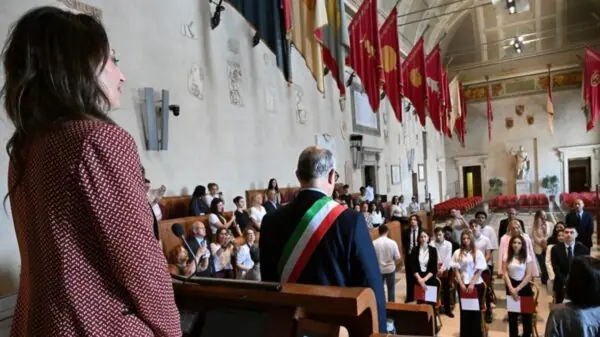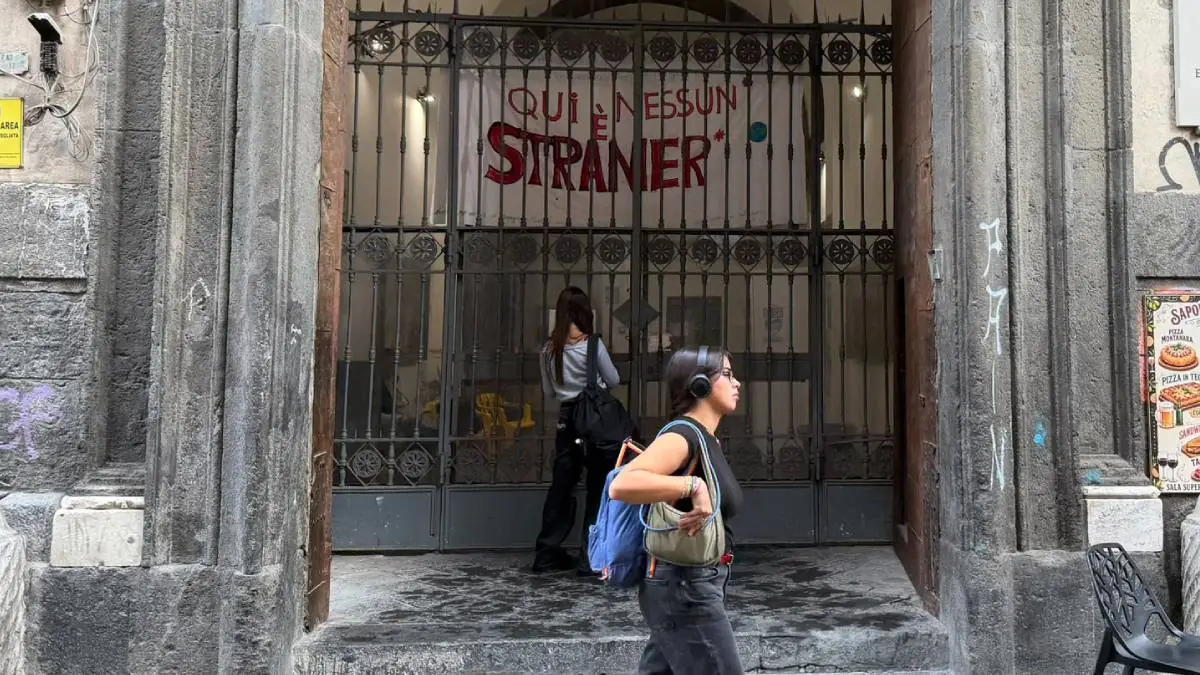
Italy’s Senate on Thursday (19) approved the bill to convert Decree-Law No. 170/2026, which establishes new rules for the integration of foreign students in the country’s schools. The measures include a 30% cap for certain students without Italian citizenship in entry-level classes and a ban on participating in school activities with one’s face covered, a rule that applies to the use of the burqa and niqab.
The vote took place on first reading. The text, which was amended during its passage through the Senate, now goes to the Chamber of Deputies for review, where it must still be approved to complete the process of conversion into law.
According to ANSA, the vote recorded 80 votes in favor and 46 against. The decree was introduced by the government of Prime Minister Giorgia Meloni and brings together measures for education, school integration and the organization of the school year.
30% cap for students without Italian citizenship
One of the main changes is set out in Article 13 of the decree, which establishes criteria for the composition of classes in schools with students from different backgrounds.
Beginning in the 2027/2028 school year, the percentage of students covered by the rule may not exceed 30% in entry-level classes of primary school and the two levels of Italian secondary education.
The cap, however, does not apply indiscriminately to all foreign students.
In the first year of primary school, the calculation includes students without Italian citizenship who were not born in Italy or who did not attend at least two years of preschool in the country.
In lower and upper secondary school, the rule applies to students without Italian citizenship who have not successfully completed at least three school years in Italy’s national education system.
Therefore, the rule uses citizenship and educational-history criteria, rather than only Italian-language proficiency.
When demand for enrollment prevents compliance with the percentage at a given school, local education authorities may take measures to distribute students among nearby institutions.
The legislation also requires consideration of proximity to the student’s residence and specific family needs.
Parents may be referred to Italian courses
Article 12 establishes measures related to Italian-language learning by the legal guardians of foreign students.
When parents’ language difficulties are identified as an obstacle to their children’s school integration, the school must report the situation to the relevant social services.
Those services may require guardians to take part in a free literacy and Italian-language learning program offered by Provincial Centers for Adult Education (CPIA).
The goal is to reach the A2 level of the Common European Framework of Reference for Languages.
The text provides for a fine of €200 to €1,000 for failure to comply with the requirement, if the situation persists after formal notification and there is no accepted justification.
Exceptions apply to guardians with serious age-, illness- or disability-related learning limitations, as well as specific situations that prevent attendance at the courses.
Rule on burqa and niqab in schools
The decree also prohibits participation in curricular and extracurricular activities at educational institutions with one’s face covered or by any other means that prevents identification of the person.
The provision applies to garments such as the burqa, which covers the body and face, and the niqab, which leaves the eyes visible.
The text provides exceptions for duly certified medical reasons and situations related to the educational or training activities themselves.
The violation may result in a fine of €200 to €1,000. When the student is a minor, the penalty will be imposed on the legal guardian.
The authority responsible for imposing the fine will be the prefect, while the school administration will be responsible for determining the violation.
Opposition criticizes integration measures
The approval prompted criticism from opposition representatives. During the legislative process, lawmakers questioned the percentage cap for students without Italian citizenship and argued that the measure could encourage the separation of students rather than broaden inclusion.
Sen. Cecilia D’Elia of the Democratic Party (PD) criticized the proposal and said the measure creates barriers rather than promoting inclusion.
Giorgia Meloni’s government argues that the rules aim to improve integration, prevent the concentration of students with language difficulties in the same classes and expand learning conditions.
After the vote, Meloni said the decree brings together measures to promote effective integration. Education Minister Giuseppe Valditara also defended the package.
Digital books will be cheaper
The text approved by the Senate also includes an amendment related to the price of textbooks.
The measure requires publishers to offer digital versions of school and university books at a price at least 50% lower than that of the respective print editions.
The package also includes initiatives to support students with disabilities, combat cyberbullying and prevent school dropout.
What happens now?
Approval in the Senate represents only one stage of the legislative process. The text goes to the Chamber of Deputies, which must consider the proposal before the process of conversion into law is completed.
Decree-Law No. 170 was published on September 30, 2026, and has a constitutional 60-day deadline for conversion, expiring on November 29.
Until the parliamentary process is concluded, the changes approved by the Senate still depend on a decision by the Chamber of Deputies.
The debate over the new rules places at the center of the Italian discussion the relationship between the integration of foreign students, the organization of schools and policies for learning the national language.
Newsletter
Últimas do Italianismo
Todo dia, às 18h, um resumo do que aconteceu na Itália direto no seu e-mail.
É gratuito e você cancela quando quiser.