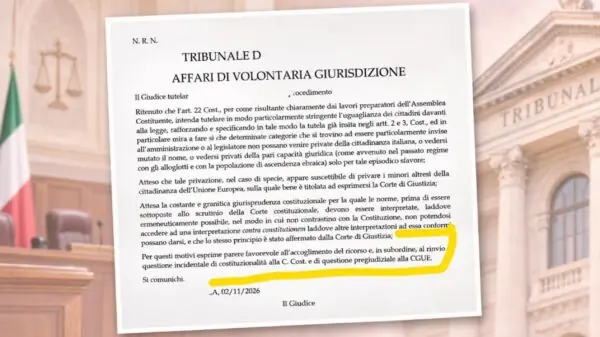
Receiving an adverse ruling from the Italian courts is one of the biggest concerns for those awaiting recognition of Italian citizenship through the courts. But an unfavorable decision does not necessarily mean the end of the case.
In ordinary civil cases, Italian law provides for two main deadlines to file an appeal: 30 days after formal notification of the ruling or six months from its publication, when there has been no notification capable of triggering the shorter deadline.
There is another important detail: as a rule, the month of August is excluded from the calculation of procedural deadlines in Italy.
Before calculating any date, however, it is necessary to verify whether the ruling was formally notified. This information does not always appear in court case-tracking apps.
30 days or six months: What is the difference?
The Italian Code of Civil Procedure establishes two main deadlines for appealing an ordinary civil ruling.
The first is the so-called termine breve, or short deadline, of 30 days, which starts running from formal notification of the ruling, under Articles 325 and 326.
The second is the termine lungo, or long deadline, of six months, calculated from the publication of the ruling, under Article 327.
In practice, the difference can be decisive.
If the ruling is published but there is no valid formal notification to trigger the short deadline, the six-month deadline generally applies.
On the other hand, if valid notification occurs, the 30-day deadline may begin to run even if the six months have not yet ended.
This does not mean that the interested party can choose between the two deadlines. The determination depends on the actions taken in the case and the rules applicable to it.
How do you know whether the ruling was notified?
A frequent question among Brazilians following cases in Italy is whether notification appears in the app or in the court’s electronic case history.
In case-tracking systems, it is possible to find entries such as deposito sentenza (filing of the ruling), pubblicazione sentenza (publication of the ruling) and comunicazione sentenza (communication of the ruling).
These records do not, by themselves, prove that there was formal notification capable of triggering the 30-day deadline.
Article 133 of the Italian Code of Civil Procedure establishes that notification by the court clerk’s office of the publication of a ruling does not trigger the appeal deadlines provided for in Article 325.
Formal notification may occur through certified email, known as PEC, including between the parties’ attorneys, without necessarily appearing in the public case history.
Therefore, only the attorney handling the case, after reviewing the procedural actions and documents, can confirm whether the ruling was formally notified and whether the applicable appeal deadline is the short one, of 30 days, or the long one, of six months.
It is not safe to assume that there are six months to appeal merely because the app shows the publication of the ruling and provides no information about notification.
August is excluded from the calculation of deadlines
Another particularity of the Italian courts is the suspension of procedural deadlines during August.
Law No. 742 of Oct. 7, 1969, establishes the so-called sospensione feriale dei termini processuali, which generally suspends the calculation of deadlines between Aug. 1 and 31.
If the deadline begins before August, the days that have already elapsed are counted, but the calculation is suspended during the month and resumes in September.
If the event that triggers the deadline occurs during August, the calculation begins only after the suspension ends.
The rule may also affect the long six-month deadline. When the suspension applies and the six-month period crosses August, the 31 days must be considered in calculating the new expiration date.
There are, however, legal exceptions, especially for certain urgent proceedings.
See how it works in practice
Imagine that a civil ruling was formally notified on July 20 and is subject to the 30-day deadline.
The calculation begins on July 21. By July 31, 11 days will have elapsed.
Between Aug. 1 and 31, the deadline is suspended. The calculation resumes on Sept. 1, with 19 days remaining.
In this example, the initially calculated expiration date would be Sept. 19. The effective date may be extended if it falls on a Saturday, Sunday or holiday, under the applicable procedural rules.
Now, imagine that notification occurred on Aug. 10. Considering the court recess suspension, the 30 days begin to be counted in September, with the expiration date initially calculated as Sept. 30.
The examples are illustrative. The deadline must be confirmed by the attorney handling the case.
There is even a calculator to determine the deadline
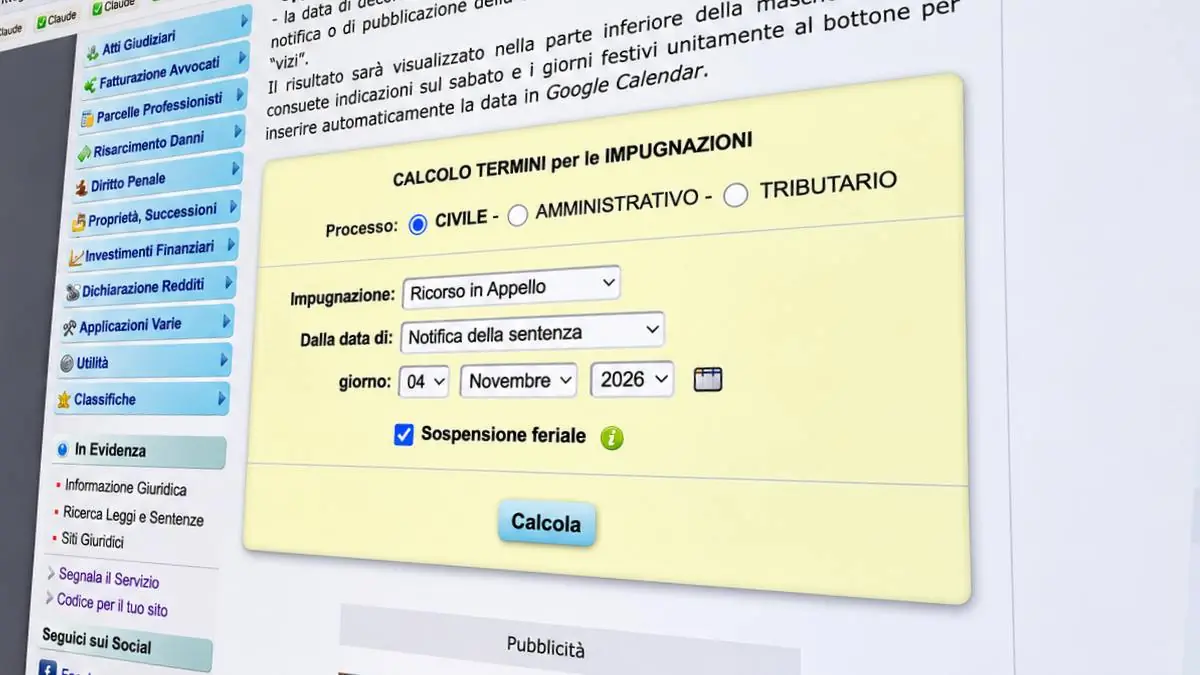
To assist with the calculation, the Italian legal portal Avvocato Andreani offers a free calculator for judicial appeal deadlines.
The tool allows users to select the type of proceeding, the type of appeal, the date of publication or notification of the ruling, and whether the August procedural suspension applies.
The Sospensione feriale field should be selected when the August suspension applies.
The calculator also takes into account rules for deadlines falling on Saturdays and holidays.
However, the tool does not replace an attorney’s analysis. It does not determine whether there was valid formal notification or whether there are procedural particularities that could alter the deadline.
What should you do after receiving an adverse ruling?
For those seeking recognition of Italian citizenship through the courts, the first step after an unfavorable decision should be to consult the attorney handling the case.
It is necessary to verify when the ruling was published, whether there was formal notification, what appeal is available and whether the proceeding is subject to the general rules for civil appeals.
This analysis is important because not every court decision automatically follows the same deadlines or allows the same type of appeal.
The existence of an adverse ruling also does not mean that the appeal will necessarily be accepted or that the decision will be overturned.
The attorney must assess the grounds for the ruling, the legal possibility of appealing and the effective expiration date.
The main precaution is not to wait until the end of the six months before confirming whether there was formal notification. If the short 30-day deadline has begun to run, delay may jeopardize the possibility of appealing.
Newsletter
Últimas do Italianismo
Todo dia, às 18h, um resumo do que aconteceu na Itália direto no seu e-mail.
É gratuito e você cancela quando quiser.