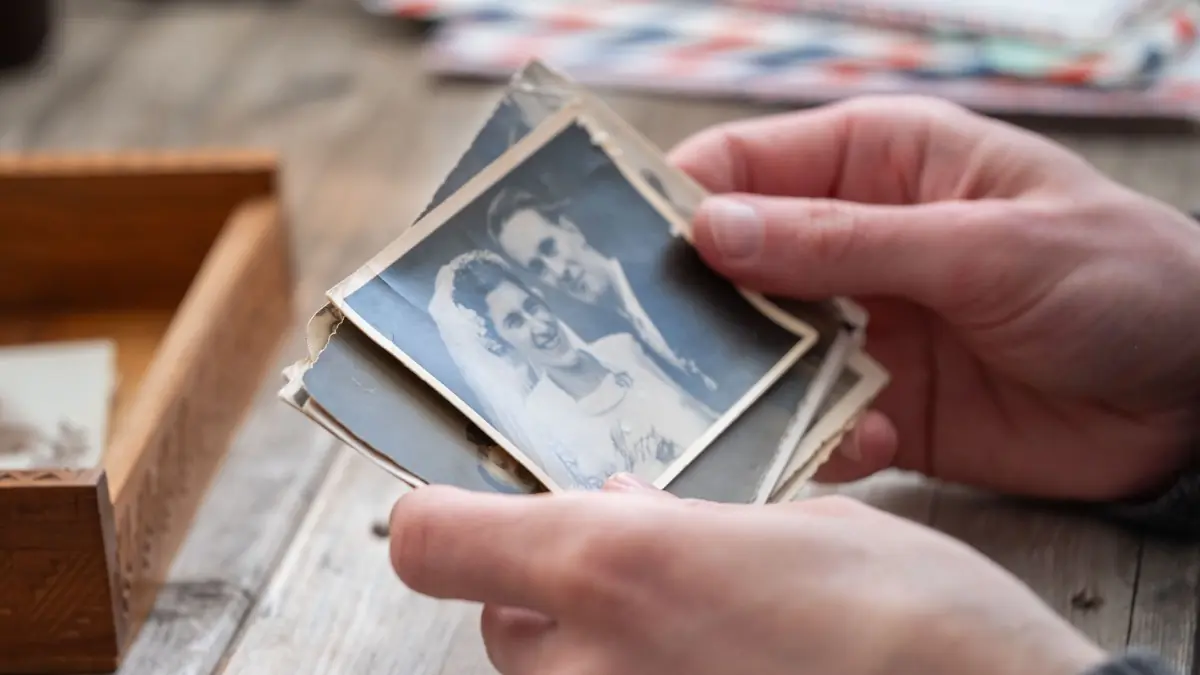
Genoa, January 15, 1908. Mario Alberto Pelosi was 24, had little money and a ship delayed by rough seas. Before embarking for Brazil, he wrote to his mother, who had remained in Parma with his siblings. He wanted to reassure her. And he left a phrase that, more than a century later, takes on another meaning:
«State allegre; pensate che forse laggiù mi attende la fortuna.»
“Be cheerful; think that perhaps fortune awaits me far away.”
Mario did not know it, but that hope was about to become a story of a final farewell.
This is a new story from Letters from America, Italianismo’s Sunday series dedicated to the correspondence of Italians who emigrated to Brazil.
The orphanage boy
Mario was born in Parma in 1883. His father died early, and his mother, a widow with four children — Mario, Ofelia, Nicarete and Bruno — could not raise them all at home. Mario, the eldest, was placed in an orphanage.
After completing elementary school, he began working on construction sites. First as a laborer, then as a technical assistant responsible for accounts and supervision. He earned his employers’ trust.
Shortly after turning 20, two events shook his life. A worker died in an accident at the construction site where he worked, and his engagement to a young woman his age came to an end.
According to the biographical account preserved by the Archivio Diaristico Nazionale, these experiences probably contributed to his decision to emigrate.
Mario made contacts with construction companies in Pará and, at the beginning of 1908, left Parma for Genoa, accompanied by his friend Raoul. His destination was Belém, in northern Brazil.
“It was as if something had separated from me”
The first letter preserved from that journey was written on January 13, shortly after his arrival in Genoa. Mario still felt the weight of the farewell.
«Quando non vidi più la vostra casa, quando la silhouette della vostra dimora scomparve da la mia vista fu come qualche cosa che si dividesse da me.»
“When I could no longer see your house, when the silhouette of your home disappeared from my sight, it was as if something had separated from me.”
He said he tried to hold back tears as he moved away from his mother and siblings. He wanted to cry out his own pain, but, he wrote, the voice of necessity spoke louder.
Ofelia and Raoul accompanied him as he left home.
Despite his sadness, Mario said he was leaving in peace. He believed that work in America could help him improve his life and, one day, be of use to his family.
The hope of finding fortune on the other side of the Atlantic was already present in that first letter. Two days later, he would repeat it.
Minutes before departure
On January 16, Mario wrote his last letter on Italian soil. He entrusted it to Raoul, who would return to Parma.
The ship’s sirens were already sounding when he said goodbye once again.
«Fra poche ore sarò in alo mare, verso l’infinito oceano; verso l’ignoto.»
Advertisement“In a few hours I will be on the high seas, toward the infinite ocean; toward the unknown.”
He said he was leaving calm and strong, confident in the possibility of building a better life. But he soon let slip the longing of someone separating from his family.
«Ricordatevi sempre del vostro Mario; ora ne sento più che mai il bisogno.»
“Always remember your Mario; now I need it more than ever.”
Before signing, he asked them to tell his youngest brother, Bruno, to behave himself. As soon as he could, he would send for him to come to Brazil.
In a postscript, he added a practical instruction: letters sent abroad required 25 centesimi in postage.
From port to port
Mario boarded the steamship Lusitania, mentioned in his correspondence in reference to the Società Italo-Spagnola.
The voyage passed through Marseille, Barcelona, Gibraltar and Lisbon. Along the way, he wrote to his family and also to his friend Raoul.
In Marseille, he observed the streetcars, complained about the dirty streets and described what he ate and drank. In Barcelona, he visited the monument to Christopher Columbus, whose figure points toward America.
He also kept travel notes intended for his family. In them, he described leaving Genoa, the city lights vanishing in the distance and the hard bed he found aboard.
When the steamship finally left the port, he returned to his cabin to cry.
In his farewell letter, Mario had asked his family to write to him at the poste restante in Lisbon, where he hoped to collect the correspondence.
It was from Portugal that he continued his journey on the steamship Rio Grande, which made the crossing to Pará.
He spent 14 days in the Atlantic, 12 of them without sighting land. According to his account, there were only two days of storms. While other passengers became ill, he did not suffer from seasickness. The problem was the food.
Beans, fava beans, peas and chickpeas, prepared with cod, repeatedly appeared in the meals. Mario said he became so sick of the food that he spent the final four days without eating, limiting himself to drinking beer, sold at 30 centesimi a glass.
“July in Italy, my foot!”
On March 8, 1908, Mario finally wrote from Belém.
He had arrived 12 days earlier, around February 25. But he had to wait for a ship to pass by to send news to his family. According to him, mail arrived and departed at intervals of 10 to 12 days.
The city he found was experiencing the prosperous years of the rubber boom. The latex trade drove the economy and transformed Belém’s urban landscape, attracting workers, merchants and investors.
Mario described a very sprawling city of low houses and heat that was difficult to bear.
«Qui fa un caldo indiavolato. Altro che mese di luglio in Italia!»
“It is hellishly hot here. July in Italy, my foot!”
Mario said that because of the intense heat, people walked through the streets wearing only shirts, without jackets, something that contrasted with the clothing habits of his hometown, Parma.
But his main concern remained reassuring his mother.
He promised to do everything possible to establish himself and make money. And he spoke again about his younger brother.
Bruno should get ready. Mario intended to send for him in August or September of that year.
At the end of the letter, he asked for news of the family and promised to write in greater detail on the next steamship.
The letter that never came
There is no other letter sent from Belém among the documents made available by the Italian archive.
What happened afterward is known through the biographical account that accompanies the correspondence.
Shortly after arriving in Pará, Mario fell ill with yellow fever and died in Belém, with no family members present. The source does not provide the exact date of his death.
Years later, the family learned details of his final days by coincidence.
Nicarete, one of Mario’s sisters, hired a maid who had lived in Pará for several years. The woman said she had worked at a hospital in Belém and had met Mario when he was hospitalized.
The young Italian had asked her a favor: if she ever returned to Italy, she should look for his family and bring them news.
It was this woman who closed Mario’s eyes after his death.
What survived
Mario Alberto Pelosi’s story is preserved in the project Italiani all’estero, I Diari Raccontano, developed from the collection of the Archivio Diaristico Nazionale in Pieve Santo Stefano, with support from the Italian Foreign Ministry.
The website brings together seven texts related to his departure and 1908 journey, including letters and personal notes.
They reveal the pain of farewell, curiosity about European ports, the discomfort of the crossing and the hope of making money in Brazil.
Only one of these records was written in Belém. In it, Mario renews the promise he made before leaving Italy: to send for his brother Bruno.
The fortune he hoped to find so far from home never came. The letters remained.
Letters from America is Italianismo’s Sunday series that recovers the stories of Italians who emigrated to Brazil through correspondence and personal documents preserved in historical archives.
Documentary source: Archivio Diaristico Nazionale, Italiani all’estero, I Diari Raccontano project, Mario Alberto Pelosi collection. Texts from January to March 1908.
Newsletter
Últimas do Italianismo
Todo dia, às 18h, um resumo do que aconteceu na Itália direto no seu e-mail.
É gratuito e você cancela quando quiser.