Connect with us

Hi, what are you looking for?

… Euro Today R$ 6,04

Genealogia

Virginio Mantesso Neto, a leading figure in Italian genealogy in Brazil, dies at 83

Historian and professor devoted decades to researching Italian immigration. A descendant of families from Veneto, Basilicata and Tuscany, he helped Brazilians reconstruct the history of their ancestors.

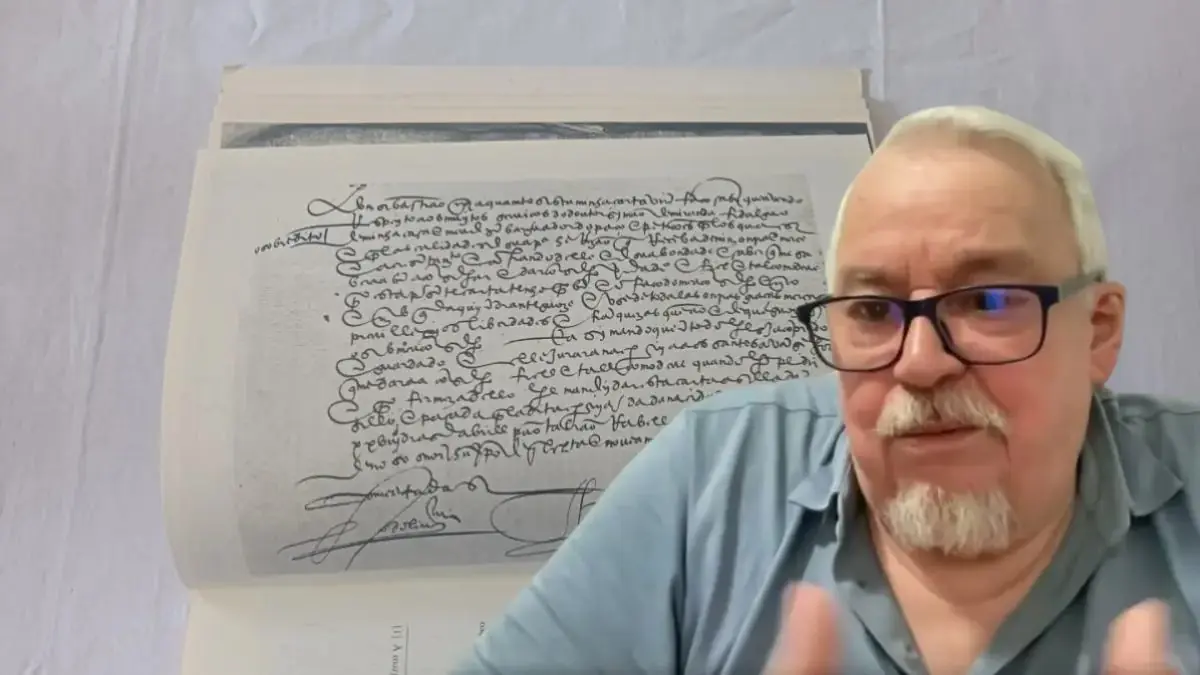
Virginio Mantesso Neto, historiador e genealogista que dedicou décadas à pesquisa da imigração italiana no Brasil | Foto: Reprodução

Historian, geologist and genealogist Virginio Mantesso Neto died this Saturday, Oct. 31, 2026, at the age of 83 in São Paulo, according to a death notice issued in his honor. Born in Sorocaba, in the interior of São Paulo state, on April 4, 1943, he became a leading figure in teaching genealogy and studying Italian immigration in Brazil.

He earned degrees in Geology in 1968 and History in 1994, both from the University of São Paulo (USP), and devoted much of his life to documentary research and training genealogists. He taught courses, took part in international events and collaborated with institutions such as the São Paulo Immigration Museum.

An Italian citizen since 1987, he also taught paleography, a discipline focused on reading and interpreting old documents, essential knowledge for those researching family records.

A family history linked to three Italian regions

Mantesso Neto’s interest in genealogy began in 1984, when he started investigating his own origins to obtain recognition of Italian citizenship. That personal search would eventually become an activity to which he would devote decades.

His family had roots in Veneto, Basilicata and Tuscany.

On his father’s side, he was the grandson of immigrant Virginio Giacomo Mantesso, born March 8, 1871, in Resana, in the province of Treviso, Veneto. His grandfather, who died in São Paulo in 1928, originated the name passed down to subsequent generations.

Advertisement

His great-grandparents Ferdinando Mantesso (1836-1895) and Maria Grazia Lorenzon (1841-1908) had married in Resana in 1861.

Another part of his paternal ancestry came from Basilicata. His grandmother Maria Jovina Grieco was born in Tietê, in the interior of São Paulo state, in 1874, the daughter of Antonio Francesco Grieco and Rosa Di Marca, who married in 1864 in Tramutola, in the province of Potenza.

His maternal family, meanwhile, originated in Tuscany. His mother, Irene Vanni (1915-2017), was born in Tatuí. His maternal grandparents, Flavio Vanni and Palmira Lucchesi, married in 1894 in Cardoso, a locality in Gallicano, in the province of Lucca.

Virginio was the son of Irene and Virginio Mantesso Filho (1908-1974), who married in Tatuí in 1935. He had a sister, Maria Palmira (1936-2023).

Much of this history was reconstructed by the researcher himself.

From searching for origins to training genealogists

What began as a family investigation became a career devoted to teaching and historical research.

Starting in 2005, Mantesso Neto began organizing and teaching courses on Italian immigration and genealogy. Four years later, he added paleography to his activities, teaching students to decipher manuscripts, certificates, and civil and religious records.

In a biographical presentation to FamilySearch RootsTech, he said he had taught about 40 in-person and online courses on Italian immigration, in addition to another 12 on paleography.

Advertisement

His work also reached the São Paulo Immigration Museum, where he participated in activities focused on the history of immigrants and research into family documents.

In 2021, he was among the authors of the Guide to Genealogical Research for Italian Citizenship, a publication intended to guide descendants in locating information about their ancestors.

Knowledge shared beyond Brazil

Mantesso Neto also took part in RootsTech, one of the leading international gatherings dedicated to genealogy, organized by FamilySearch.

In 2021, he gave three talks. The following year, he made four presentations and coordinated a group of approximately 20 teachers, historians and genealogists responsible for more than 30 pieces of content on Italian immigration.

The topics included Italian history, records of abandoned children, historical heritage and family research methods.

At the same time, he maintained his connection to Geology, a field in which he conducted studies on the history of science, geotourism and the preservation of Brazil’s geological heritage.

Advertisement
1 of 4
Virginio Mantesso Neto (center), alongside Taddone (left) and his former student Sueli Tobias de Searom, during a break at the FamilySearch Imigrantes eventPhoto: Personal archive
Virginio Mantesso Neto during the recording of an educational video about lithography for the Sisson 200 Anos exhibition, at the National LibraryPhoto: Reproduction
Virginio Mantesso Neto (left) during a technical visit to the historic Fazenda Ibicaba, in Cordeirópolis (SP), a site connected to the history of European immigration in BrazilPhoto: Reproduction
Virginio Mantesso Neto during a demonstration of handmade paper production at the Oficina de Materialidade da Escrita ManualPhoto: Reproduction

At the FamilySearch Imigrantes event

Virginio Mantesso Neto (center), alongside Taddone (left) and his former student Sueli Tobias de Searom, during a break at the FamilySearch Imigrantes event.

Recording at the National Library

Virginio Mantesso Neto during the recording of an educational video about lithography for the Sisson 200 Anos exhibition, at the National Library.

Visit to Fazenda Ibicaba

Virginio Mantesso Neto (left) during a technical visit to the historic Fazenda Ibicaba, in Cordeirópolis (SP), a site connected to the history of European immigration in Brazil.

Handmade paper workshop

Virginio Mantesso Neto during a demonstration of handmade paper production at the Oficina de Materialidade da Escrita Manual.
.itg{margin:24px 0 28px;font-family:Inter,system-ui,sans-serif;background:#111;color:#fff;max-width:100%;overflow:hidden} .itg *{box-sizing:border-box} .itg-stage{position:relative;aspect-ratio:16/9;background:#000;overflow:hidden} .itg-track{position:absolute;inset:0} .itg-slide{position:absolute;inset:0;margin:0!important;opacity:0;visibility:hidden;transition:opacity .25s} .itg-slide.is-on{opacity:1;visibility:visible} .itg-slide img{color:transparent;font-size:0;width:100%!important;height:100%!important;max-width:none!important;object-fit:cover;display:block;margin:0!important} .itg-cred{position:absolute;right:8px;bottom:6px;font-size:10px;line-height:1.2;color:#fff;opacity:.85;text-shadow:0 1px 2px #000;padding:0!important;margin:0!important;background:none!important} .itg-count{position:absolute;left:12px;top:12px;z-index:3;background:rgba(0,0,0,.72);color:#fff;font-size:13px;font-weight:600;padding:4px 10px;letter-spacing:.02em} .itg-count b{color:#D6001C;font-weight:800} .itg-nav{position:absolute;top:50%;z-index:3;transform:translateY(-50%);width:44px;height:44px;border:0;border-radius:50%;background:rgba(0,0,0,.6);color:#fff;font-size:30px;line-height:40px;cursor:pointer;padding:0;display:flex;align-items:center;justify-content:center} .itg-nav:hover{background:#D6001C} .itg-prev{left:10px}.itg-next{right:10px} .itg-thumbs{display:flex;gap:6px;padding:8px;overflow-x:auto;scrollbar-width:thin;background:#111} .itg-thumbs button{flex:0 0 84px;height:52px;padding:0;border:2px solid transparent;background:#222;cursor:pointer;opacity:.55;transition:opacity .2s} .itg-thumbs button.is-on,.itg-thumbs button:hover{opacity:1;border-color:#D6001C} .itg-thumbs img{width:100%!important;height:100%!important;object-fit:cover;display:block;margin:0!important} .itg-texts{padding:14px 18px 20px;background:#000} .itg-text{display:none} .itg-text.is-on{display:block} .itg-text h3{margin:0 0 8px!important;font-size:20px!important;line-height:1.25!important;font-weight:700!important;color:#fff!important} .itg-text h3 span{color:#D6001C;margin-right:4px} .itg-text h3 em{font-style:normal;font-weight:600;font-size:14px;color:#bbb;margin-left:6px;white-space:nowrap} .itg-desc{margin:0!important;font-size:15px!important;line-height:1.55!important;color:#e6e6e6!important} @media (max-width:767px){ .itg{margin:18px -15px 24px;width:calc(100% + 30px);max-width:calc(100% + 30px)} .itg-nav{width:38px;height:38px;font-size:26px} .itg-thumbs button{flex-basis:68px;height:44px} .itg-text h3{font-size:18px!important} .itg-desc{font-size:15px!important} } (function(){ document.querySelectorAll(‘.itg’).forEach(function(g){ if(g.dataset.ready)return;g.dataset.ready=1; var slides=g.querySelectorAll(‘.itg-slide’),texts=g.querySelectorAll(‘.itg-text’),thumbs=g.querySelectorAll(‘.itg-thumbs button’),num=g.querySelector(‘.itg-count b’),n=slides.length,cur=0; function go(i){ cur=(i+n)%n; [slides,texts,thumbs].forEach(function(list){list.forEach(function(el,k){el.classList.toggle(‘is-on’,k===cur);});}); num.textContent=cur+1; var t=thumbs[cur],box=t.parentNode;box.scrollTo({left:t.offsetLeft-box.clientWidth/2+t.clientWidth/2,behavior:’smooth’}); if(window.gtag){gtag(‘event’,’galeria_slide’,{galeria:g.id,slide:cur+1});} } g.querySelector(‘.itg-prev’).onclick=function(){go(cur-1);}; g.querySelector(‘.itg-next’).onclick=function(){go(cur+1);}; thumbs.forEach(function(t,k){t.onclick=function(){go(k);};}); var x0=null,stage=g.querySelector(‘.itg-stage’); stage.addEventListener(‘touchstart’,function(e){x0=e.touches[0].clientX;},{passive:true}); stage.addEventListener(‘touchend’,function(e){if(x0===null)return;var dx=e.changedTouches[0].clientX-x0;if(Math.abs(dx)>40)go(cur+(dx<0?1:-1));x0=null;},{passive:true}); g.tabIndex=0;g.addEventListener('keydown',function(e){if(e.key==='ArrowRight')go(cur+1);if(e.key==='ArrowLeft')go(cur-1);}); }); })();

The farewell to a master

The death notice issued in his honor highlighted the professor’s bond with the students and researchers who followed his work.

“With sorrow, we announce that our beloved Prof. Virginio Mantesso has passed away,” the statement says.

The message adds: “He has become another star in the sky, inspiring our studies.”

It ends with an expression that sums up the recognition of his admirers: “Gratitude, Master Virginio.”

Newsletter

Últimas do Italianismo

Todo dia, às 18h, um resumo do que aconteceu na Itália direto no seu e-mail.

Newsletter — Últimas do Italianismo

É gratuito e você cancela quando quiser.

Italianismo Specials

Click to comment

Leave a Reply

Your email address will not be published. Required fields are marked *

More stories:

News

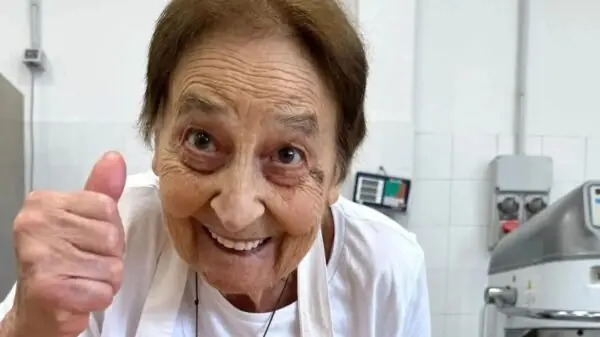
The Tuscan cook became famous for videos of traditional recipes, cooked for Qatar’s royal family and received an award from Forbes Italia.

Citizenship

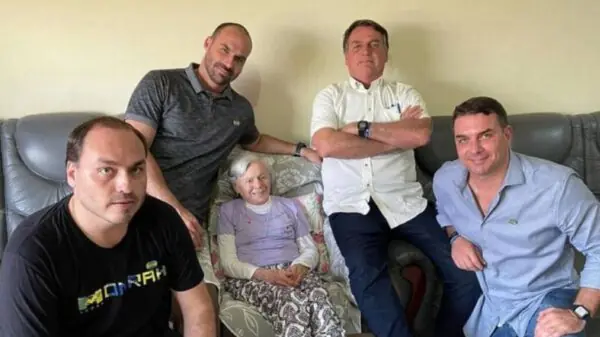
An official document reveals that Flávio, Eduardo and Carlos Bolsonaro relied on the Bonturi branch, rather than the Bolzonaro family of Veneto.

Destinations

From Rome to the Dolomites, the selection brings together cities and villages known for Christmas traditions, markets and year-end attractions.

Food & Drink

Critic Eric Asimov’s selection favors light wines with up to 13.5% alcohol and includes wines from Tuscany and Abruzzo.