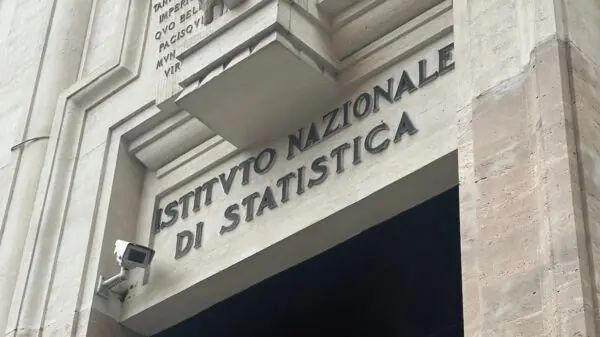
The number of appointments for Italian citizenship recognition at the Consulate General of Italy in São Paulo may remain quite limited in 2027 and 2028. The restriction stems from Law No. 11 of Jan. 19, 2026, which established an annual cap on new applications received by consular offices abroad.
Under the rule, each consulate may not receive, each year, more adult citizenship recognition applications than the number of procedures completed in the year before the legislation took effect. Since the rule took effect on Feb. 19, 2026, the reference period is between Jan. 1 and Dec. 31, 2025.
In São Paulo’s case, however, there is no consolidated public figure indicating how many procedures were actually completed that year.
The lack of this information makes it difficult to calculate the cap that will apply over the next two years and fuels concern among descendants awaiting an opportunity to submit their applications.
The warning gained traction after the opening of approximately 150 appointments for the final quarter of 2026, between October and December, according to information reported to Italianismo by a person who follows the operation of the consular service.
The volume represents a significant reduction compared with the service capacity attributed to the consulate in previous years.
What Law No. 11/2026 determines
Law No. 11/2026 amended Article 10 of Legislative Decree No. 71/2011 and established new rules for processing applications for Italian citizenship recognition from residents abroad.
Paragraph 6 states:
“Consular offices process applications received before the date referred to in paragraph 5, first sentence. Until that date, each consular office receives an annual number of citizenship recognition applications from adults not exceeding the number of citizenship recognition procedures completed between Jan. 1 and Dec. 31 of the year preceding the year in which this provision takes effect. The maximum number referred to in the second sentence shall in no case be less than 100.”
In a loose translation, consulates will continue to process applications received before responsibilities are transferred to the central administration. Until that date, each office may not receive, each year, more citizenship recognition applications from adults than the number of recognition procedures completed between Jan. 1 and Dec. 31 of the year before the provision takes effect.
The legislation also establishes a minimum limit of 100 applications per year for each consulate.
The most important detail lies in the criterion used to establish the cap: the law refers to completed recognition procedures, not appointments made available, people summoned or applications merely received.
Therefore, calculating São Paulo’s cap will require knowing the number of procedures actually completed during 2025.
The transfer to Rome and the two limits provided by law
The legislation also provides for the transfer of new adult citizenship recognition applications to a general directorate-level office within the central administration of the Italian Foreign Ministry.
The change is scheduled for Jan. 1, 2029.
Until then, consulates will continue receiving new applications, but they will be subject to the annual limit established by paragraph 6.
There is also a second restriction, set out in paragraph 5. In the first two years of the central office’s operation, in 2029 and 2030, the Rome office will also have an annual limit on receiving applications.
In that case, the benchmark will be different: the number of applications for which consulates charged the consular fees provided for in Article 7-bis during 2025.
They are therefore two distinct criteria. For consulates, the reference is procedures completed in 2025. For the central office in Rome, the reference is applications that generated consular fee charges during the same period.
São Paulo: uncertainty over the 2025 figures
The year 2025 was marked by changes in Italian legislation and the interruption of part of the citizenship recognition routine at consulates.
On Aug. 14, 2025, the Consulate of São Paulo published a notice stating that it had already summoned applicants covered by the previous legislation.
The office also clarified that citizenship applications submitted after March 27, 2025, would be assessed under the new legislation, Law No. 74/2025.
The notice, however, did not provide the number of recognition procedures completed during the year.
This information is essential because the new legal restriction does not consider only the number of people who secured an appointment or were summoned. What matters is how many procedures were actually completed.
According to the estimate presented to Italianismo, the volume of services provided in 2025 could have reached approximately 1,500 people. This is, however, an estimate, not an official figure confirmed by the consulate.
The 150 appointments in 2026 and the scenarios for 2027
Concern increased with the opening of approximately 150 appointments for October, November and December 2026, according to a report received by Italianismo.
Based on that number, three possibilities emerge for estimating São Paulo’s service capacity.
Most favorable scenario: approximately 1,500 procedures
If the consulate completed about 1,500 recognition procedures in 2025, that could be the annual benchmark for applying the restriction set out in paragraph 6.
It is the most favorable hypothesis among the estimates presented, but it depends on confirmation of the official figures.
Intermediate scenario: approximately 600 appointments
Another projection considers the 150 appointments made available in the final quarter of 2026. If that volume is annualized by multiplying it by four, the result would be approximately 600 appointments.
The calculation represents an operational projection. It is not, by itself, the criterion established by Law No. 11/2026.
Most restrictive scenario: 150 appointments
The most pessimistic hypothesis assumes that the 150 appointments available in the final quarter of 2026 will be maintained as the operational benchmark for the entire year.
In that case, capacity would be extremely reduced.
It is important to emphasize that the latter two scenarios do not replace the legal benchmark. The definitive number will depend on the procedures actually completed in 2025, subject to the minimum of 100 annual applications provided for by the legislation.
From thousands of recognitions to a few hundred?
The scale of the concern becomes clearer when considering the Consulate of São Paulo’s service history.
According to the report sent to Italianismo, the consular office recognized between 5,000 and 7,000 people per year through 2024.
That figure still needs to be compared with official statistics and with the specific criterion of completed procedures used by the new legislation.
If the more restrictive estimates are confirmed, the reduction in service capacity could be very significant.
“It is frightening. It is simply frightening,” says the source interviewed by Italianismo.
The concern is that the combination of the interruption of services in 2025, the limited resumption in 2026 and the restriction established by the new law will result in a much smaller number of opportunities for descendants in the coming years.
Consulate needs to release 2025 data
The main information missing to assess the impact of Law No. 11/2026 in São Paulo is the number of citizenship recognition procedures completed between Jan. 1 and Dec. 31, 2025.
The clarification would make it possible to calculate the annual limit set out in paragraph 6 and better understand the prospects for opening appointments in 2027 and 2028.
It would also be important for the consulate to clarify how many procedures were completed in 2025 and how it intends to apply the criterion established by the legislation.
Until these figures are released, projections of 150, 600 or 1,500 appointments should be treated as scenarios, not as officially confirmed limits.
For thousands of descendants awaiting an opportunity for Italian citizenship recognition, the information could make a difference in planning the coming years.
Newsletter
Últimas do Italianismo
Todo dia, às 18h, um resumo do que aconteceu na Itália direto no seu e-mail.
É gratuito e você cancela quando quiser.