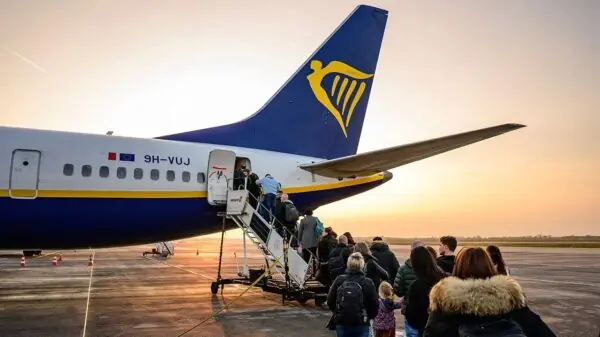
Europe could face the largest increase in airfares in its history in 2027, according to Ryanair CEO Michael O’Leary. The executive forecasts fare increases of up to 20% over the next 12 months as a result of rising aviation fuel costs and a possible reduction in available seats.
The forecast was presented Tuesday (20) during a news conference in Brussels, Belgium. According to O’Leary, ticket prices could rise between 10% and 20%, in what he described as a potentially historic development for Europe’s airline industry.
The assessment comes amid rising operating costs for airlines, worsened by the war in Iran, which has caused a sharp increase in international aviation fuel prices.
More expensive fuel threatens airlines
One of the main problems facing the industry is the gradual expiration of contracts that protect companies against fluctuations in fuel prices.
These contracts, known as hedges, allow airlines to lock in the price of part of the fuel needed for their operations in advance.
Ryanair, for example, has about 80% of its fuel needs hedged through March 2027, at a price close to US$67 per barrel.
Advertisement
The situation will be different beginning in April 2027. For the following fiscal year, only 15% of the airline’s projected fuel is covered by contracts, at about US$85 per barrel.
According to O’Leary, prices on the spot market are about twice that amount.
That means Ryanair and other European airlines could face significantly higher costs throughout 2027.
Data from the International Air Transport Association, or IATA, helps illustrate the problem. The organization projects that the average price of aviation fuel will reach US$152 per barrel in 2026, up from US$90 in 2025.
The projected increase is nearly 70%.
Fewer available seats could drive up fares
In addition to fuel, a reduced supply of flights could put pressure on prices.
Ryanair’s CEO predicts that financial difficulties, bankruptcies and acquisitions among airlines will reduce the number of seats available in the European market in 2027.
With fewer flight options, especially on the most popular routes, competition could decrease and lead to higher fares.
Advertisement
Higher operating costs are already affecting companies’ financial results.
In the first quarter of fiscal 2027, which ended in June 2026, Ryanair’s net profit fell 34%, to €538 million, from €820 million in the same period a year earlier.
The airline attributed part of the decline to the surge in the cost of fuel not covered by contracts and lower average fares charged to passengers.
Ryanair announces cuts to 20 routes in Belgium
During the news conference in Brussels, O’Leary also announced the removal of 20 routes and more than 1 million seats from Ryanair’s winter schedule in Belgium.
The move was linked to a planned increase in the country’s air travel tax, which will rise from €2 to €7 in January 2027.
The decision illustrates the pressure that costs and taxes place on the operations of low-cost airlines, known as low cost.
Advertisement
Ryanair is one of the leading operators in this segment in Europe and maintains an extensive network of connections among European destinations, including Italian cities.
Travel to Italy could feel the effects
The forecast of higher fares also concerns passengers who use low-cost airlines to travel between European countries.
Italy is among the markets served by Ryanair, with operations at airports including Rome, Milan-Bergamo, Bologna, Naples and Palermo.
If the forecast is confirmed, travel between Italian cities and other European destinations could become more expensive, especially during periods of higher demand.
For Brazilians planning to travel to Italy, the most direct effect could occur on segments operated within Europe.
That does not mean, however, that fares between Brazil and Italy will necessarily rise between 10% and 20%. The executive’s estimate refers to the European market, although rising fuel costs also affect airlines that operate intercontinental routes.
The impact will depend on competition, flight availability and how costs develop over the coming months.
O’Leary’s forecast does not constitute a fare increase announced by airlines. It is a projection for 2027, subject to market conditions and, above all, to changes in international fuel prices.