Working remotely in another country may seem simple until requirements involving residency, taxes, opening a bank account and access to local services begin. A survey released by Holafly in September evaluated precisely these obstacles and placed Georgia as the destination with the least “friction” for digital nomads in 2026. Portugal also appears among the 10 most favorable countries in coverage of the study.
The Digital Nomad Friction Index 2026 analyzed 17 destinations sought by remote workers. Its criteria include visa complexity, bureaucracy after arrival, access to banking services, connectivity, health care and risks that could disrupt a work routine.
According to Holafly, nearly half of the remote workers and digital nomads surveyed, 46.8%, said they had already lost billable hours or income because of problems while traveling. Among participants who reported burnout, 89.1% said they felt overwhelmed by bureaucratic issues, while 86.5% identified losing internet connectivity as a major source of anxiety.
Georgia has fewer obstacles
Georgia ranked at the most favorable end of the index.
According to the survey, the Caucasus country stands out for having the lowest day-to-day bureaucratic burden among the destinations evaluated. The study says foreign workers face fewer registration requirements and can open a bank account with only a passport in certain situations.
Peru and South Africa appear immediately afterward in reports that reproduced the results. In Peru’s case, the study highlights residency options and an income requirement considered relatively low, although the risk of earthquakes and El Niño-related events lowers its rating. South Africa, meanwhile, loses points mainly in the area of health care.
Advertisement
Portugal ranks among the top 10
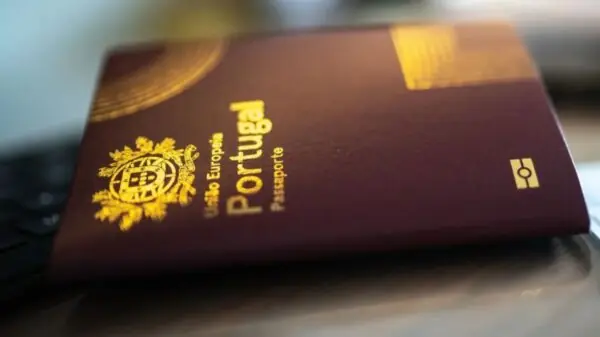
Portugal was also included among the destinations considered simpler for those planning to live while working remotely.
At the same time, the study emphasizes that European Union countries tend to require more procedures after arrival. According to Holafly, all EU countries included in the survey, including Portugal, Spain and Germany, require some form of address registration and tax identification.
In the list published by SiViaggia and Euronews, the top 10 are Georgia, Peru, South Africa, Thailand, Malaysia, Vietnam, Croatia, Hungary, Portugal and the United Arab Emirates.
There is, however, an important methodological caveat. Holafly’s public release currently available does not provide the full ranking of the 10 countries with the least friction. It confirms Georgia as the simplest destination and, conversely, identifies the 10 countries with the most obstacles. Therefore, the intermediate ranking of the other destinations should be attributed to the reports that covered the survey.
Italy is not among the 17 countries analyzed, so the study does not allow for a direct comparison of the country with Portugal or the other countries in the ranking.
At the other end, Holafly ranks Colombia and Mexico as the destinations with the greatest friction, followed by Germany, Indonesia and Argentina. Bulgaria, Spain, the United Arab Emirates, Croatia and Hungary round out the list of the 10 countries with the most obstacles among the 17 evaluated.
The index should not be interpreted as a migration recommendation. Entry, residency and tax rules vary depending on nationality, length of stay, source of income and the worker’s tax situation.