

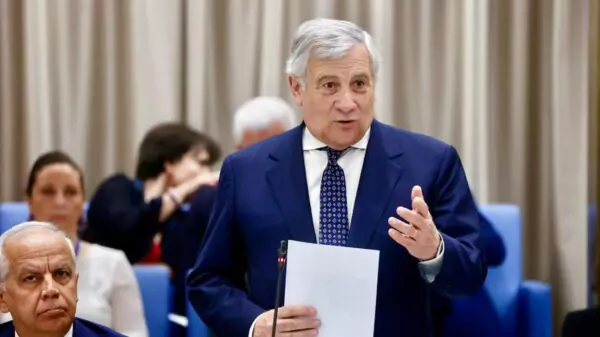





































The General Council of Italians Abroad (CGIE) approved six priority proposals to modify the new Italian citizenship law. The measures seek to correct restrictions imposed on citizenship by descent and defend the rights of Italians residing outside the country. plenary assembly of the body It ends this Friday (20), in Rome.
The main criticism concerns the exclusivity of Italian citizenship. The new legislation has transformed dual citizenship into an obstacle to the transmission of this right to future generations. The CGIE proposes to re-establish the recognition of the accumulation of citizenships as a positive criterion, in accordance with previous policies.

Another proposal is the creation of a certificate of Italian language, culture and civilization. This document would serve as an alternative to the requirement of two years of residence in Italy to prove effective ties to the country. The aim is to allow access to citizenship to descendants with proven cultural ties, even without residence.
The third proposal concerns the automatic transmission of citizenship to minor children of recognized Italians. The current reform has prevented this right in many cases. The CGIE proposes to guarantee automatic transmission by requiring the same certificate of Italian citizenship only when these minors reach the age of majority.
The council also advocates eliminating deadlines for reacquiring citizenship for those who lost it due to legislation prior to Law 91/1992. According to the CGIE, the number of people affected is limited and does not justify time restrictions.
The CGIE also requests access to statistical data on citizenship processes carried out by consulates since 2014. This information is considered essential for technical analyses and the formulation of public policies.
Finally, the body wants to recognize the right to submit a citizenship application to all those who, until March 27, 2025, were already on consulate waiting lists, even if they have not yet received a date to file the documentation.
Despite the willingness to engage in dialogue expressed by Foreign Minister Antonio Tajani, the councilors criticized the lack of listening to communities abroad during the formulation of the new legislation. Daniel Taddone, representing Brazil, described as “unacceptable” the generalization of blame for abuses committed by opportunistic agencies: “Collective blame is typical of totalitarian regimes,” he stated.
The CGIE's proposals will be included in the final conclusions of the assembly and forwarded to the government. Undersecretary for Foreign Affairs Giorgio Silli said he understood the council's position and would evaluate the points presented.