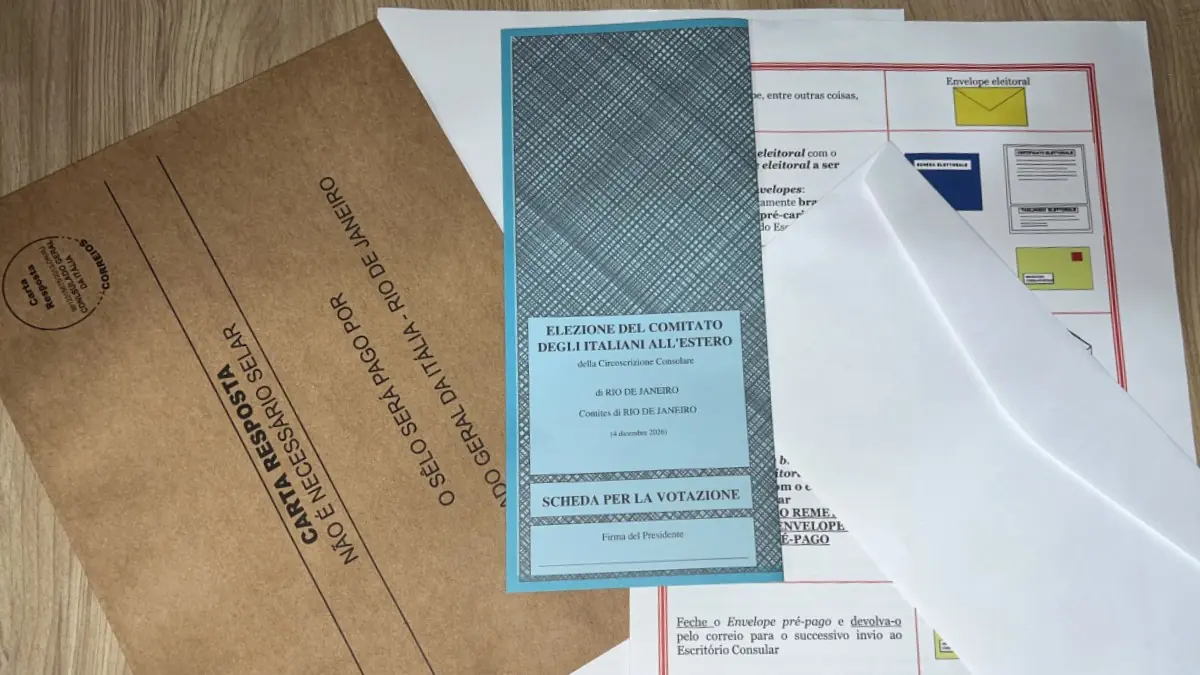
Italian citizens living abroad who requested to take part in the 2026 Comites elections have begun receiving, since Tuesday (10), envelopes containing the materials needed to vote. Voting is by mail, and ballots must reach consulates by December 4.
The election materials are sent to the home addresses of about 30,000 eligible voters and include the ballot, the electoral certificate, two envelopes and instructions for completing and returning the ballot.
Only Italian citizens who requested registration on the electoral roll by November 4, 2026 and meet the legal requirements may participate.
Unlike Italian parliamentary elections and referendums, the materials are not automatically sent to all citizens registered with AIRE, the registry of Italians living abroad.
What are the Comites?
The Comites (Comitati degli Italiani all’Estero) are bodies representing Italian citizens living outside Italy before embassies and consulates.
Created in 1985, they work to defend the collective interests of Italian communities, promote cultural and social activities, and preserve the memory of immigration. They may also submit requests to consular authorities and present proposals related to services for Italian citizens living abroad.
The committees consist of 12 or 18 representatives, depending on the number of Italians living in the consular district. The term lasts five years.
Who can vote?
To participate, citizens must meet the legal requirements for exercising the right to vote, be registered with AIRE and have lived in the relevant consular district for at least six months, as of the election date.
It was also mandatory to expressly request inclusion on the electoral roll by November 4, 2026. Holding Italian citizenship and being registered with AIRE are therefore not sufficient conditions for receiving the envelope.
What is in the envelope?
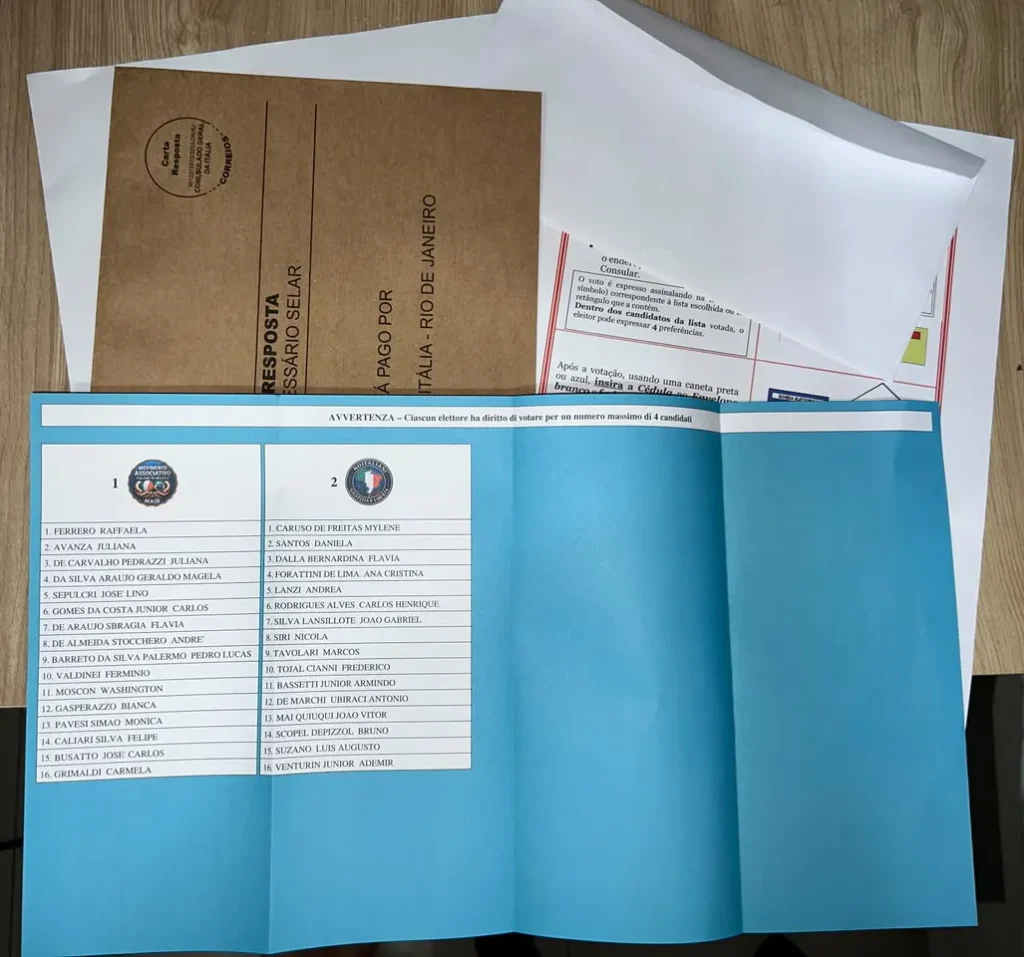
The materials include the ballot listing the slates and candidates, the electoral certificate (certificato elettorale), a small envelope for the ballot, another envelope for returning it to the consulate, and official instructions.
The electoral certificate has a detachable section called the tagliando elettorale, used to verify voting eligibility. It must be returned in the outer envelope, separate from the ballot, to preserve ballot secrecy.
See the step-by-step guide to voting
1. Open the election materials
Carefully open the envelope received in the mail. Check that the ballot, electoral certificate, envelopes and instructions are included.
2. Separate the electoral receipt
Locate the certificato elettorale and detach the tagliando elettorale. Set this section aside to place it in the larger envelope, along with the envelope containing the ballot.
3. Choose a slate
Open the ballot and identify the competing slates. Using a blue or black pen, mark the chosen slate according to the official instructions. The vote must be cast for only one slate.
4. Choose candidates, if desired
In addition to the slate, voters may indicate candidates from the same list. In Comites with 18 members, up to six preferences are allowed. In committees with 12 members, the limit is four. It is not mandatory to indicate candidates or use all preferences.
Preferences must be given to candidates from the chosen slate. Under Italian law, preferences exceeding the permitted limit are considered invalid, without this in itself invalidating the entire vote for the slate.
5. Place the ballot in the small envelope
Fold the ballot according to the instructions received and place it in the smaller envelope. Seal it carefully. The small envelope must contain only the ballot. Do not include the certificate or personal documents.
6. Prepare the return envelope
Place the sealed small envelope and the tagliando elettorale detached from the certificate in the larger envelope. Seal the outer envelope. Do not make notes, signatures or additional identifying marks, beyond any information that may be specified in the official materials.
7. Send it by mail
Take the return envelope to the post office and follow the mailing instructions provided by the consulate. Send the materials as soon as possible to avoid delivery delays.
What can invalidate the vote?
Errors in filling out the ballot or preparing the envelopes may compromise the validity of the vote. Voters should avoid marks that could identify them, should not mix candidates from different slates, and should check that the small envelope is properly sealed.
It is also essential to keep the electoral receipt outside the small envelope. The official instructions included with the materials must be followed before mailing.
São Paulo will have 18 representatives
In the consular district of the Consulate General of Italy in São Paulo, 18 Comites members will be chosen. The official list of slates and candidates should be consulted on the consulate’s website.
Because the committee will have 18 representatives, each voter may indicate up to six candidates from the chosen slate. The choice is individual, and the vote must be free and secret.
Until when can the ballot be sent?
The deadline for consulates to receive envelopes is December 4, 2026. The date is not merely a mailing deadline: the ballot must reach the consulate by the close of the election period.
Voters who receive the materials should fill out the ballot and arrange for its return as soon as possible. Postal delivery delays may prevent the ballot from being counted.
What if the materials do not arrive?
Citizens who requested registration by the deadline but have not yet received the envelope should contact the electoral section of the responsible consulate. It is also important to check whether the home address provided to the consulate is up to date.
In São Paulo, guidance is available on the official portal of the Consulate General of Italy. The general rules can also be consulted at the Italian Foreign Ministry.
Newsletter
Últimas do Italianismo
Todo dia, às 18h, um resumo do que aconteceu na Itália direto no seu e-mail.
É gratuito e você cancela quando quiser.