Those looking to travel through Europe away from traffic noise will find, in a ranking by Staysure and Avanti Travel Insurance, a selection of 10 cities, with three Italian destinations among the top-ranked.
See the 10 European cities in the ranking.
The quietest cities in Europe
A study by Staysure and Avanti Travel Insurance revealed which are the quietest cities in Europe. The ranking lists the most peaceful ones, based on factors such as the extent of urban streets and the presence of pedestrian routes, as well as measures to protect peace and quiet, such as restrictions on Sunday commerce or limits on flights at the nearest airport.
1. Venice Veneto, Italy
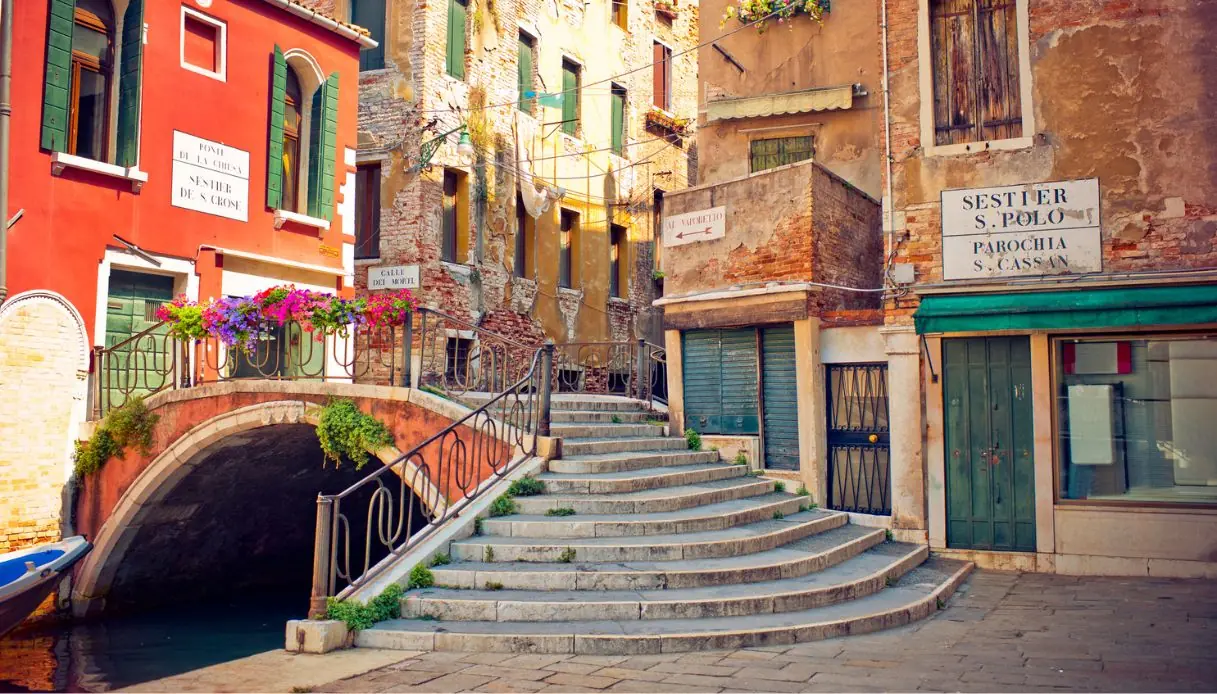
Venice tops the ranking. According to the study's data, the historic center has just two kilometers of streets with traffic within a two-kilometer radius, as well as more than 170 kilometers of car-free routes. Canals, historic squares and winding alleyways make it possible to experience the city away from vehicle noise.
2. Lisbon Portugal
The Portuguese capital ranks second and has one of the lowest densities of busy streets among the cities analyzed. The destination combines tiled facades, historic trams and sweeping views of the Tagus River, as well as many green spaces that allow visitors to alternate moments of tranquility with discovering local culture.
3. Amsterdam Netherlands
In third place, Amsterdam has more than 30 kilometers of car-free streets and routes along the canals, ideal for exploring the city at a more relaxed pace. In addition to its canals and museums, the Dutch capital has independent shops, cafes and opportunities to connect with local culture in a laid-back atmosphere.
4. Barcelona Catalonia, Spain
Barcelona ranks fourth, just off the podium. The capital of Catalonia brings together historic areas, pedestrian spaces and neighborhoods with a strong architectural identity, such as the Gothic Quarter, making it possible to explore much of the city center on foot.
5. Brussels Belgium
The Belgian capital ranks fifth, ahead of Athens, which is in sixth place. The center features historic squares, pedestrian areas and attractions such as the Grand-Place, one of the city's best-known landmarks.
7. Zurich Switzerland
In seventh place, Zurich is the only Swiss city among the top 10 in the ranking. The historic center is compact, and the areas along the Limmat River and public spaces make getting around on foot easy.
9. Florence Tuscany, Italy
Florence ranks ninth and is the third Italian city in the ranking, alongside Venice and Milan. The historic center is home to monuments, squares and streets that can be explored on foot, as well as areas with restrictions on vehicle traffic.
10. Stockholm Sweden
Stockholm rounds out the ranking in 10th place. The Swedish capital is spread across islands and features historic areas, parks and public spaces near the water. Even in last place, the city is among the 10 quietest cities analyzed.
.itg{margin:24px 0 28px;font-family:Inter,system-ui,sans-serif;background:#111;color:#fff;max-width:100%;overflow:hidden}
.itg *{box-sizing:border-box}
.itg-stage{position:relative;aspect-ratio:16/9;background:#000;overflow:hidden}
.itg-track{position:absolute;inset:0}
.itg-slide{position:absolute;inset:0;margin:0!important;opacity:0;visibility:hidden;transition:opacity .25s}
.itg-slide.is-on{opacity:1;visibility:visible}
.itg-slide img{color:transparent;font-size:0;width:100%!important;height:100%!important;max-width:none!important;object-fit:cover;display:block;margin:0!important}
.itg-cred{position:absolute;right:8px;bottom:6px;font-size:10px;line-height:1.2;color:#fff;opacity:.85;text-shadow:0 1px 2px #000;padding:0!important;margin:0!important;background:none!important}
.itg-count{position:absolute;left:12px;top:12px;z-index:3;background:rgba(0,0,0,.72);color:#fff;font-size:13px;font-weight:600;padding:4px 10px;letter-spacing:.02em}
.itg-count b{color:#D6001C;font-weight:800}
.itg-nav{position:absolute;top:50%;z-index:3;transform:translateY(-50%);width:44px;height:44px;border:0;border-radius:50%;background:rgba(0,0,0,.6);color:#fff;font-size:30px;line-height:40px;cursor:pointer;padding:0;display:flex;align-items:center;justify-content:center}
.itg-nav:hover{background:#D6001C}
.itg-prev{left:10px}.itg-next{right:10px}
.itg-thumbs{display:flex;gap:6px;padding:8px;overflow-x:auto;scrollbar-width:thin;background:#111}
.itg-thumbs button{flex:0 0 84px;height:52px;padding:0;border:2px solid transparent;background:#222;cursor:pointer;opacity:.55;transition:opacity .2s}
.itg-thumbs button.is-on,.itg-thumbs button:hover{opacity:1;border-color:#D6001C}
.itg-thumbs img{width:100%!important;height:100%!important;object-fit:cover;display:block;margin:0!important}
.itg-texts{padding:14px 18px 20px;background:#000}
.itg-text{display:none}
.itg-text.is-on{display:block}
.itg-text h3{margin:0 0 8px!important;font-size:20px!important;line-height:1.25!important;font-weight:700!important;color:#fff!important}
.itg-text h3 span{color:#D6001C;margin-right:4px}
.itg-text h3 em{font-style:normal;font-weight:600;font-size:14px;color:#bbb;margin-left:6px;white-space:nowrap}
.itg-desc{margin:0!important;font-size:15px!important;line-height:1.55!important;color:#e6e6e6!important}
@media (max-width:767px){
.itg{margin:18px -15px 24px;width:calc(100% + 30px);max-width:calc(100% + 30px)}
.itg-nav{width:38px;height:38px;font-size:26px}
.itg-thumbs button{flex-basis:68px;height:44px}
.itg-text h3{font-size:18px!important}
.itg-desc{font-size:15px!important}
}
(function(){
document.querySelectorAll(‘.itg’).forEach(function(g){
if(g.dataset.ready)return;g.dataset.ready=1;
var slides=g.querySelectorAll(‘.itg-slide’),texts=g.querySelectorAll(‘.itg-text’),thumbs=g.querySelectorAll(‘.itg-thumbs button’),num=g.querySelector(‘.itg-count b’),n=slides.length,cur=0;
function go(i){
cur=(i+n)%n;
[slides,texts,thumbs].forEach(function(list){list.forEach(function(el,k){el.classList.toggle(‘is-on’,k===cur);});});
num.textContent=cur+1;
var t=thumbs[cur],box=t.parentNode;box.scrollTo({left:t.offsetLeft-box.clientWidth/2+t.clientWidth/2,behavior:’smooth’});
if(window.gtag){gtag(‘event’,’galeria_slide’,{galeria:g.id,slide:cur+1});}
}
g.querySelector(‘.itg-prev’).onclick=function(){go(cur-1);};
g.querySelector(‘.itg-next’).onclick=function(){go(cur+1);};
thumbs.forEach(function(t,k){t.onclick=function(){go(k);};});
var x0=null,stage=g.querySelector(‘.itg-stage’);
stage.addEventListener(‘touchstart’,function(e){x0=e.touches[0].clientX;},{passive:true});
stage.addEventListener(‘touchend’,function(e){if(x0===null)return;var dx=e.changedTouches[0].clientX-x0;if(Math.abs(dx)>40)go(cur+(dx<0?1:-1));x0=null;},{passive:true});
g.tabIndex=0;g.addEventListener('keydown',function(e){if(e.key==='ArrowRight')go(cur+1);if(e.key==='ArrowLeft')go(cur-1);});
});
})();
Venice ranks first, while Milan comes in eighth and Florence is ninth. Lisbon, Portugal, placed second, and Amsterdam, in the Netherlands, rounds out the top three.
The survey, based on Euromonitor International’s Top 100 City Destinations Index 2025, considers the extent of highways and main roads, pedestrian-only streets and local rules protecting quiet, such as restrictions on noise and nighttime flights.
The ranking does not directly measure noise pollution in decibels: it is based on urban infrastructure and local rules, and a city’s position does not mean that all of its neighborhoods are quiet. (With information from InItalia/Virgilio)