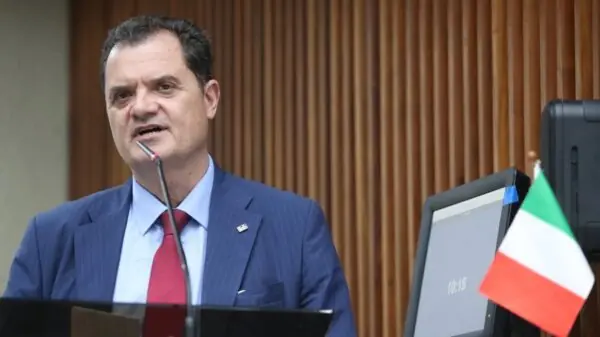
The Italian government confirmed Friday, the 6th, that the recognition of Italian citizenship for Flávio, Eduardo and Carlos Bolsonaro took place in accordance with legal and administrative rules. The information was presented to Italy’s Chamber of Deputies in response to questions from lawmaker Angelo Bonelli.
The case drew attention after the lawmaker noted that the brothers had their citizenship recognized in just 58 days, a timeframe that raised suspicions of preferential treatment.
The key detail is that the 58 days correspond to the document review, not the total waiting time for recognition of Italian citizenship.
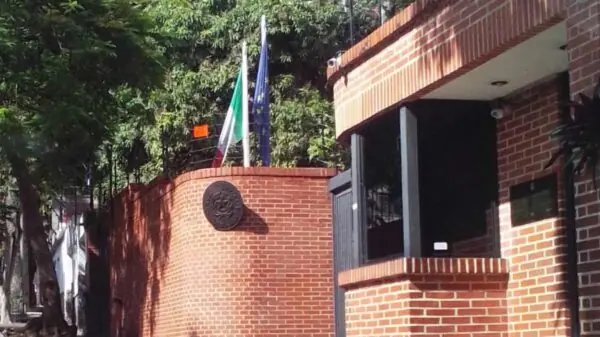
According to Undersecretary Matilde Siracusano, Eduardo Bolsonaro joined the waiting list at the Italian Embassy in Brasília on December 22, 2020. Flávio and Carlos registered on October 26, 2021.
All three formally submitted their documents on November 8, 2022, and had their citizenship recognized on January 5, 2023.
Recognition is not a grant
There is also a recurring technical error in headlines about the case: the claim that Italy had “given” or “granted” citizenship to the Bolsonaro brothers.
Advertisement
Under the iure sanguinis procedure, in accordance with the legislation in force in 2023, Italy recognized a right arising from Italian descent. It was not a naturalization process or a benefit granted by political decision.
The consular administration’s role was to verify compliance with legal requirements.
Likewise, completing the document review in 58 days does not in itself constitute an irregularity. The administrative deadline of up to 730 days does not establish a minimum timeframe for recognition to be completed.
The government also explained that the joint appointment for the three brothers followed a consular practice applied to family members descended from the same Italian ancestor (Italianismo published Bolsonaro’s children used a Tuscan lineage to obtain Italian citizenship).
Brasília has a different consular reality
The comparison with Brazilians who waited 10 years for citizenship recognition requires another caveat.
Italian consular districts in Brazil had different demands and structures. Brasília’s reality cannot automatically be equated with that of São Paulo, Curitiba or Porto Alegre, regions with a large concentration of descendants of Italians.
This does not eliminate the need to verify whether the order of appointments was respected.
Bonelli questions precisely this point and maintains that preferential treatment occurred. In the parliamentary inquiry, he states that the embassy was still serving people who had registered in 2018 as of November 2022. The government did not provide enough data to settle this discussion about the waiting list.
Advertisement
The lawmaker announced that he intends to take the case to judicial authorities to investigate possible political interference.