


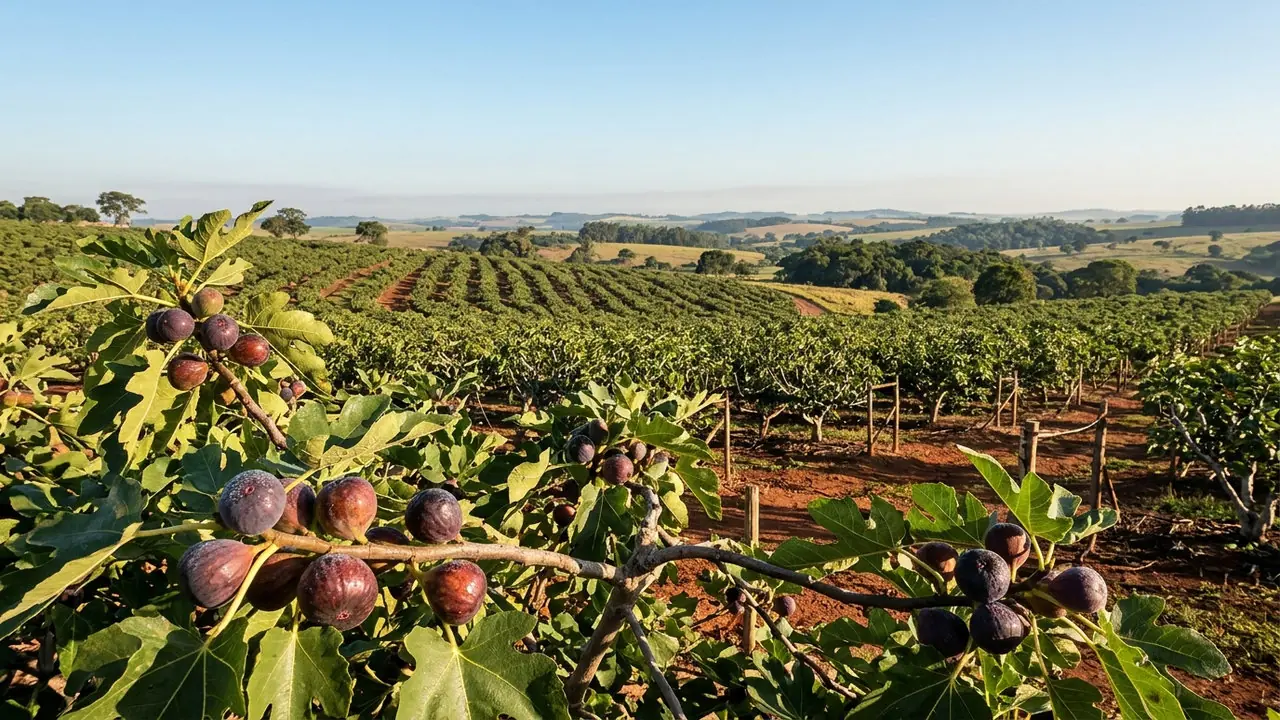
A fig cutting brought from Italy in 1901 helped transform the history of Valinhos, in the interior of São Paulo state. The person responsible was immigrant Lino Busatto, who introduced the cultivation of the fruit in the city and gave rise to an agricultural tradition that has spanned generations.
More than 120 years later, Valinhos is known as the Capital of the Purple Fig. The fruit has become a symbol of the municipality and the centerpiece of one of the region’s largest popular festivals.
In 2026, the 75th Festa do Figo and the 30th Expogoiaba welcomed 222,000 visitors, according to a report by Valinhos City Hall.
The Italian cutting that changed the city’s economy
The story began in 1901, when Lino Busatto brought the first fig cuttings from Italy and planted them on his property, in the area of what are now Campos Salles and Carlos Gomes streets, according to a historical record from City Hall.
Cultivation spread across rural properties. By around 1910, figs were already being commercially produced, establishing an activity that would shape Valinhos’ economy and identity.
The families of Italian immigrants played an important role in expanding production. Work on the small farms helped turn an agricultural crop into a regional symbol. As in other stories of immigration, family records also preserved traditions, names and customs. Italianismo reported, for example, how Giuseppe became José in Brazil.
A festival that welcomed 222,000 people
The tradition led to the creation of the Festa do Figo, whose first official edition took place in 1949.
In 2026, the event reached its 75th edition, held together with the 30th Expogoiaba from January 16 to February 1 at Monsenhor Bruno Nardini Municipal Park.
The program included fruit exhibitions and sales, food, cultural performances and concerts. Admission to the common areas was free.
The attendance of 222,000 people shows how cultivation begun by an Italian immigrant also became a tourist attraction. The region maintains other expressions of this heritage, such as the Festa Italiana de Valinhos and cultural events organized by the community.

Italian heritage continues in Valinhos
In May 2026, Valinhos celebrated 130 years since its elevation to Peace District status with a program that included the Italian festival Viva la Nostra Gente, music, food and the traditional Tombo da Polenta. Italianismo covered the Italian festival and the Tombo da Polenta in the city.
The Italian presence also left its mark in other areas of local culture. Born in Valinhos, Adoniran Barbosa was the son of Italian immigrants and portrayed aspects of the daily lives of São Paulo workers in his songs.
The history of fruit growing in São Paulo is part of a broader legacy of Italian communities in Brazil. Festivals such as the Festa Italiana de Jundiaí also preserve the memory of immigration through food and community gatherings.
In Valinhos, the purple fig remains a symbol of a tradition that began more than a century ago with the arrival of cuttings brought from Italy.
Newsletter
Últimas do Italianismo
Todo dia, às 18h, um resumo do que aconteceu na Itália direto no seu e-mail.
É gratuito e você cancela quando quiser.
