The Committee of Italians Abroad of Rio Grande do Sul (Comites-RS) has decided to demand explanations from Italy’s consul general in Porto Alegre, Luis Cavalieri, following his statements about descendants who allegedly waited too long to seek recognition of Italian citizenship.
Read here: New Italian consul says descendants “missed their chance” to apply for citizenship
The demand is legitimate. The diplomat was wrong to generalize a situation involving thousands of families subjected to years of waiting at consulates.
But Comites’ reaction raises another, equally uncomfortable question: where was this willingness to demand action when thousands of descendants were waiting for service, with no prospect of having their cases reviewed?
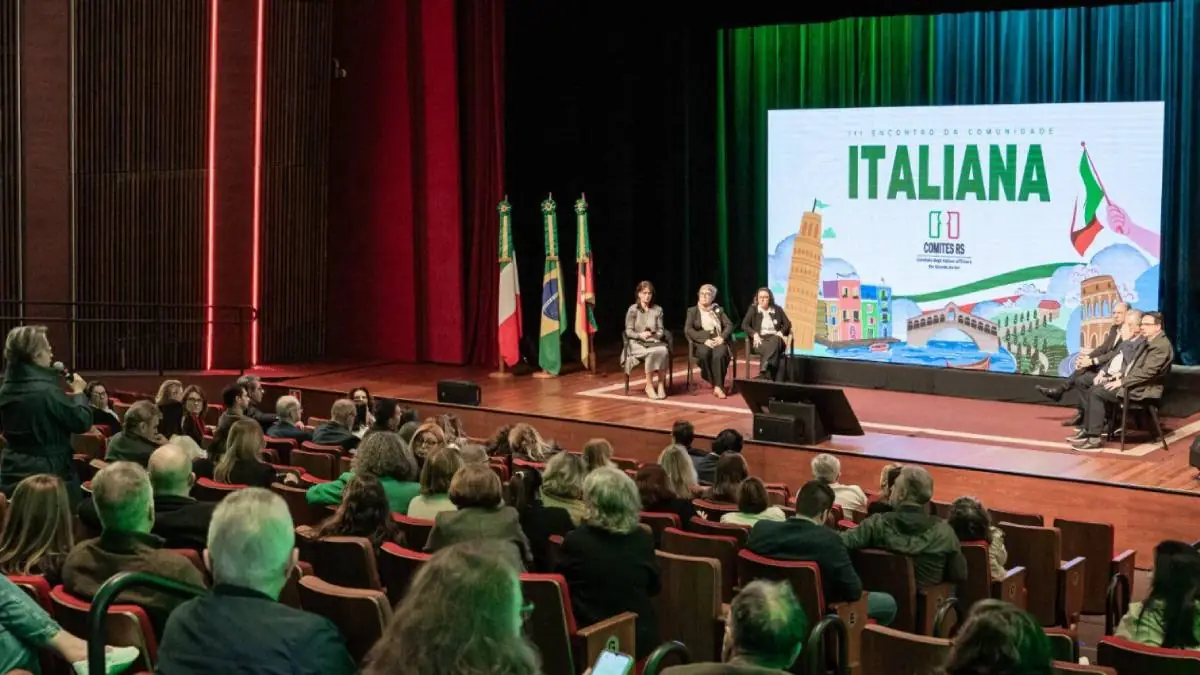
Less than two months ago, on Sept. 24, the same Comites held the 3rd Meeting of the Italian Community of Rio Grande do Sul at the Legislative Assembly in Porto Alegre.
Consul Luis Cavalieri, who had recently taken office, was one of the event’s highlights.
At the time, Comites-RS President Cristina Mioranza emphasized the organization’s closer ties with the consulate and celebrated the visibility it had achieved during her tenure.
The atmosphere was one of celebration and institutional harmony.
Now, in a press statement, amid the negative repercussions of Cavalieri’s statements, Comites has taken a demanding stance.
The contrast deserves attention.
Criticizing a consul after his words spark outrage is easy. More difficult is demonstrating independence and demanding solutions when the community faces structural problems, away from the spotlight.
The waiting line that could not wait
In March 2025, the Consulate General of Italy in Porto Alegre was still calling applicants with registration numbers between 16,001 and 17,000 to submit documents for recognition of Italian citizenship.
At the time, the Rio Grande do Sul press reported a waiting line estimated at more than 120,000 people, including members of registered family groups.
The situation had already been known for years.
Entire families had gone to the consulate, followed the required procedures and received registration numbers. Many were still waiting for an opportunity to submit their documents.
On March 28, 2025, the Italian government issued Decree-Law No. 36, later converted into Law No. 74, which severely restricted citizenship recognition by descent.
The new legislation preserved certain situations predating the change, but excluded many of those who were only registered on waiting lists, without a formal application filed or an appointment confirmed under the law.
For those families, the problem was never simply that they had put it off.
They sought out the Italian state. The Italian state was the one that failed to serve everyone before the rules changed.
And it is in this context that Comites’ actions need to be examined.
What did Comites do for those in line?
It must be acknowledged that Comites-RS spoke out against the restrictions on Italian citizenship in 2025. The organization published positions opposing the changes and took part in the debate over their effects.
But opposing a law does not, in itself, answer the central question: what concrete measures were taken to defend those who had already been on the consulate waiting list for years?
Did Comites formally demand the disclosure of the exact number of people waiting for service?
Did it demand an expansion of consular capacity or a public schedule to reduce the wait?
Did it request information on the number of families that remained without being called until the new restrictions took effect?
Did it submit to the Italian Foreign Ministry any specific survey on descendants harmed by the delay?
If these initiatives were carried out, the community has the right to know the documents, dates, responses received and, above all, the results.
The issue is not to deny previous statements. It is to know whether institutional representation translated into effective pressure in the face of a problem that dragged on for years.
What is Comites for, after all?
Italian Law No. 286 of Oct. 23, 2003, establishes that Comites are bodies representing Italians living abroad in their relations with diplomatic and consular authorities.
The law provides for representation, proposal and cooperation functions in defending the interests of the Italian community.
It is true that Comites does not manage the consulate, does not control the citizenship waiting line and cannot order the recognition of applications.
Its legal representation is also focused on Italian citizens living abroad, which requires distinguishing that status from the situation of descendants who have not yet been recognized.
None of this, however, prevents the organization from demanding transparency, promoting public discussions and bringing the problems faced by the community to the authorities.
Institutional representation cannot be limited to organizing cultural events, tributes, photographs with authorities and speeches about preserving traditions.
These activities have value. But they do not replace demands for efficient public services.
A representative’s role is not only to maintain good relations with authorities. It is also to question them when those relationships fail to produce satisfactory answers for the community.
In September, the consul was a highlight
The Sept. 24 meeting offers a snapshot of this institutional relationship.
According to the report published by Comites-RS itself, approximately 200 people attended the event, held at the Teatro Dante Barone at the Legislative Assembly.
The program included presentations by associations, cultural activities, discussions about opportunities in Italy and an accounting of the administration’s work.
Luis Cavalieri was given space to present his work guidelines and speak about bringing younger generations closer to Italy.
The event’s public report highlights this participation, but does not present concrete commitments made on that occasion to clarify the situation of descendants who remained in the consular waiting line.
This does not mean the matter was never addressed in internal meetings. It means that the public documentation reviewed does not make it possible to identify which specific demands were made at that meeting.
And this distinction is fundamental.
If Comites had institutional access to the new consul, why not publicly and objectively set out an agenda of demands concerning the problems that had accumulated in Italian citizenship recognition?
What answers were obtained?
What commitments were made?
Closeness to the consulate should serve to produce solutions and information, not merely to demonstrate institutional prestige.
Cavalieri was wrong, but the crisis did not begin with him
Luis Cavalieri took over the Consulate General of Italy in Porto Alegre at the end of August 2026.
The citizenship crisis, therefore, predates his tenure.
In an interview published by the newspaper Pioneiro on Nov. 16, the diplomat said that many descendants had waited too long to seek citizenship recognition. He also questioned the degree of connection some applicants had with Italy.
The statement sparked a reaction because, in its generalization, it disregarded the cases of families that had requested service long before the legislative reform.
It is legitimate to discuss the cultural ties of those seeking a nationality. It is also legitimate to advocate for learning the Italian language.
What cannot be done is to confuse an individual choice to postpone an application with the situation of someone who sought consular service and spent years waiting to be called.
In that case, the delay cannot be attributed exclusively to the applicant.
But holding Cavalieri alone responsible would also be a convenient oversimplification.
The diplomat inherited a service system whose capacity was already insufficient to meet all the accumulated demand.
The demands, therefore, need to reach the consular administration, the Italian authorities responsible for the decisions and the organizations that present themselves as representatives of the community.
Outrage does not replace accountability
Comites’ reaction to Cavalieri’s statements may be legitimate, but it is not enough to demonstrate consistent action in defending the community’s interests.
The organization needs to show what it did before the controversy.
It needs to explain what measures it took in response to the long waiting line, what answers it received from authorities and what it was effectively able to move forward.
The issue takes on added relevance because Italians living abroad are on the eve of elections to renew Comites, scheduled for Dec. 4, 2026.
Voters have the right to evaluate not only the speeches and meetings that were held, but also the results of the representation exercised throughout the term.
Comites-RS has the opportunity to present this record, with documents and verifiable results.
The community does not need selective outrage. It needs representatives capable of demanding action from authorities even when there is no controversy mobilizing social media.
Cavalieri owes explanations for what he said. The consulate owes transparency about the waiting line it managed. And Comites must demonstrate what it did, concretely, to defend the community’s interests throughout all these years.
Because representation is not just about appearing alongside the consul when everything seems fine.
It is also about having the courage to demand action when things are going badly.
By Reginaldo Maia
Newsletter
Últimas do Italianismo
Todo dia, às 18h, um resumo do que aconteceu na Itália direto no seu e-mail.
É gratuito e você cancela quando quiser.