Suspicions of preferential treatment in the recognition of Italian citizenship for relatives of Brazilian politicians did not begin with the Bolsonaros. In 2005, then-first lady Marisa Letícia Lula da Silva also faced questions about whether she had cut ahead in the Italian consulate’s line.
The episode returned to public debate Thursday (29), after Italian Foreign Minister Antonio Tajani compared the Italian passports granted to Marisa Letícia and the children of former President Jair Bolsonaro.
The statement came amid controversy over Flávio Bolsonaro’s Italian citizenship. He left Brazil after being defeated by Luiz Inácio Lula da Silva in Sunday’s (25) presidential election, according to the ANSA news agency.
Tajani said the documents were issued because the beneficiaries were entitled to citizenship by descent under Italian legislation in force at the time. The comparison drew a response from Italian lawmaker Angelo Bonelli, who is demanding explanations about the procedures used in the Bolsonaro brothers’ cases.
Marisa Letícia also faced suspicions over the waiting list
The debate over possible consular privileges had already reached the Palácio do Planalto more than 20 years ago.
On Dec. 3, 2005, the newspaper O Estado de S. Paulo published a report stating that Marisa Letícia had obtained Italian citizenship that year, following an application begun about five years earlier.
According to the newspaper, the Planalto did not disclose the exact date of the recognition or comment on speculation that the then-first lady had used her husband’s influence to expedite service at the consulate.
At the time, the press reported that waiting times at Italian consulates could stretch for several years. The approximately five years attributed to Marisa’s case, by itself, does not demonstrate preferential treatment. The reports presented no evidence that she had received privileged treatment.
The controversy, however, reached the National Congress. In a speech in the Chamber of Deputies in December 2005, then-Rep. Alberto Fraga (PFL-DF) questioned the first lady’s decision to obtain Italian citizenship and speculated about her motivations, without presenting evidence of irregularities in the consular procedure.
The episode shows that Italian passports obtained by relatives of Brazilian presidents had already become a source of political dispute long before the Bolsonaro case.
Lula’s children also received Italian passports
On March 22, 2007, a column by Cláudio Humberto published by Tribuna do Norte reported that Italian passports had been issued to Marcos Cláudio, Fábio Luiz, Sandro Luiz and Luiz Cláudio. Marisa, a descendant of Italians, had already received her document.
The sources consulted contain no proof that Lula’s children benefited from irregular procedures or an improper acceleration of service.
Italy was already debating Marisa’s citizenship in 2005
The recognition of Marisa Letícia’s citizenship also sparked political debate in Italy. In November 2005, former Italian Prime Minister Massimo D’Alema used the Brazilian first lady’s case to criticize a contradiction in the country’s legislation.
The debate questioned the fact that descendants of Italians living abroad could obtain citizenship and vote in Italian elections, while immigrants who had lived and worked in Italy for years remained without that right.
D’Alema’s criticism did not allege irregularities in Marisa’s case. It was a political question about the differences between the rights granted to descendants of Italians and foreign residents in the country.
Now, suspicion falls on the Bolsonaros
More than two decades later, the discussion about Italian consulate waiting lists once again involves relatives of a Brazilian president. Flávio and Eduardo Bolsonaro obtained recognition of Italian citizenship in 2023. Carlos Bolsonaro received recognition in 2024.
According to information presented by Rep. Angelo Bonelli, Flávio and Eduardo joined the waiting list at the Italian Embassy in Brasília in 2020 and appeared at the diplomatic mission in November 2022 to discuss the progress of their cases.
Bonelli wants to know whether the brothers were served in chronological order and has requested information about the stages of the procedures.
Recognition within a shorter period than that faced by other applicants does not, by itself, demonstrate favoritism. The inquiry depends on documents that make it possible to compare service conditions and the criteria applied to the cases.
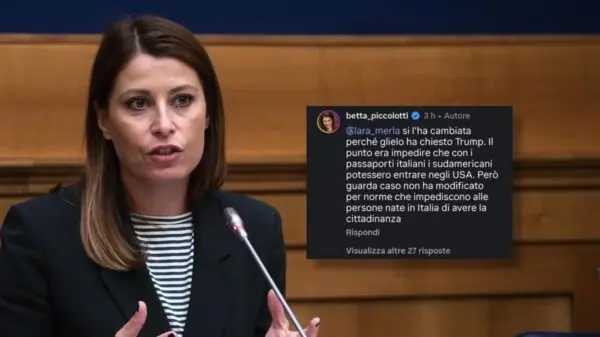
Tajani defends passports and notes change in the law
Commenting on the case, Tajani said that both Bolsonaro’s children and Marisa Letícia were entitled to recognition of Italian citizenship by descent. The foreign minister also mentioned the legislative reform enacted by Giorgia Meloni’s government in 2025, which restricted access to Italian citizenship for descendants born abroad.
Bonelli called the comparison inappropriate and argued that Marisa Letícia had never used an Italian passport to evade justice. The lawmaker also criticized the use of Italian citizenship by Brazilian politicians facing legal problems.
The discussion about using a passport to leave Brazil, however, is not equivalent to the discussion about possible favoritism in the processing of a citizenship application.
Consular privilege has no ideology
The episodes involving the Lula and Bolsonaro families show that concern about possible privileges in Italian citizenship spans governments and parties.
In 2005, the press questioned whether Marisa Letícia had cut ahead in line. In 2026, an Italian lawmaker is demanding explanations about the speed of Jair Bolsonaro’s children’s cases.
The circumstances differ, as do the elements presented in each case. So far, the sources consulted do not allow for the conclusion that favoritism occurred in either case.
The right to Italian citizenship by descent does not depend on political affiliation. Likewise, respect for the order of service should not depend on an applicant’s last name.
The question remains relevant for thousands of descendants of Italians who waited years for a consular appointment: Were the relatives of influential politicians served under the same criteria applied to other citizens?
Answering that question requires documents, dates and administrative transparency, regardless of who is in power.
Newsletter
Últimas do Italianismo
Todo dia, às 18h, um resumo do que aconteceu na Itália direto no seu e-mail.
É gratuito e você cancela quando quiser.