



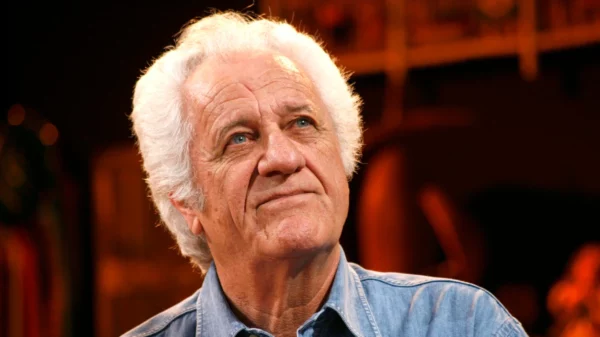












In an interview with the Italianism this Wednesday (3), Ricardo Merlo, president of MAIE (Associative Movement Italiani all'Estero)He spoke about controversial topics involving Italians abroad.
Merlo explained the details of the proposed reform of Italian citizenship presented by the movement, and criticized the new fee of 2 euros for Italians living abroad. who wish to access the public health system in ItalyHe accused sectors of the South American press of promoting a distorted image of MAIE's performance in Parliament.
Next, the full interview with Ricardo Merlo.
* * *
Regarding the proposed law presented by MAIE concerning citizenship legislation, the Noi Moderati group recently decided to support your project. In your opinion, does this entry, this support in the debate, open a window with real chances of bringing the project to a vote in Parliament?
Ricardo Merlo: I believe it's important because the support of one of the four pillars of the majority always opens up hope, especially considering the current situation, where we are truly facing a law that is absolutely restrictive, severely limiting the possibility of transmitting citizenship.
We anticipate a response from the Constitutional Court in March, and Depending on what is decided, the government will not stand idly by. Because if the Constitutional Court annuls the entire decree, they will certainly resume the discussion to continue down this path. So we believe that presenting a balanced proposal that, in a way, sends a signal, that is, that includes everyone, was necessary. In practice, everyone would be included: children and grandchildren would have the right to Italian citizenship without any restrictions. And from great-grandchildren onwards, the Italian B1 level would be required.
In other words, everyone would remain included, with the future in mind, without retroactive effects. Before any potential approval of the new bill, everyone should be treated according to current legislation. We believe this is a balanced proposal that the government can consider, or at least use as a starting point to hear everyone's opinion.

Yes, that statement leads me to two more considerations. We've seen that this proposal isn't very well received by the government. You've already said what you expect from the government, that it rethink the legislation according to what is decided by the Constitutional Court, but…
And that he will have to do it, if necessary.
But what do you think about other political movements? Do you think it's necessary to seek more support?
Yes. This proposal is neither from the government nor from the majority. We waited, because instead of always criticizing and complaining about what happened—which is valid for a while—there comes a time when it's necessary to present an alternative proposal. And we have already presented the alternative proposal. It has already been supported by one of the majority's pillars, Noi Moderati, and signed by President Lupi.
Now we expect the Constitutional Court to do its job. After that, I don't believe the government will remain idle. And if the government wants to present a new law that doesn't conflict with what the Court indicates, this proposal could serve as a reference, especially since it was made by a movement that, in practice, is the only one that represents Italians abroad in Parliament. Apart from those elected abroad who operate within their own parties.

Okay. And regarding how MAIE is viewed abroad, among Italians in general and public opinion… There has been a circulating idea that the movement is, in a way, close to the government. Do you believe that presenting this proposal now, even before the Constitutional Court's decision, is a strategy to bring MAIE closer to Italians abroad?
First of all, we are a small movement, with few parliamentarians. But we were the only ones to reach the government. I was undersecretary along with the Democratic Party. We don't pursue ideological politics. The most important thing for us is to have dialogue with everyone, with the government and with the opposition, to achieve results. And we have already achieved them. In Brazil, for example, when I was undersecretary for Italians abroad, first with the Giallo-Verde government and then with the Conte government, we managed to open a consulate in Vitoria.
We also built and opened the consulate in Montevideo. We reopened the consulate in Manchester, which had been closed by the Democratic Party. I can talk about concrete things, with results that can be seen. If we look, last week there was a vote in Parliament on a €2 fee for access to Italian public healthcare for Italians abroad. This affects, for example, retirees who contributed their entire lives. If they are abroad, they will have to pay this amount to access the public healthcare system in Italy. We voted against it. The left voted with the government.
So, our autonomy and independence are clear from the facts. We voted against it and didn't ask anyone for permission. All those elected abroad from the left—with the exception of one who left the plenary session—voted in favor of this tax. In other words, they voted so that an Italian retiree living abroad has to pay 2 euros a year to have access to public healthcare.
Public health is a right that the State offers to its citizens, regardless of where they live. If a Brazilian living in Italy returns to Brazil, they are not told that they cannot use the public system there because they live abroad. Public health is public for citizens, above all, and also for residents, of course. But for Italian citizens, without a doubt.
People notice this. Especially in South America, where we've won the last five elections. The results show that we are a movement that truly represents people. Last week's vote was something I really didn't expect: the left, en masse, voting in favor of a tax that penalizes Italians abroad. This, for us, is unacceptable.
We voted against it, just as we voted against the citizenship proposal. The first post on my network was Representative Tirelli's speech in plenary, a very strong speech against the proposal, against the government. Our independence is absolute.
Then, in the Senate, in the constitutional affairs committees, which are among the most important, and also in the plenary sessions, the absence of the opposition in the votes was something inexplicable.
One thing is the political propaganda carried out by some, including certain media outlets in South America, which disseminate distorted information. But the truth comes out in the votes. In these two votes, fundamental for Italians abroad, we made it clear that we are absolutely autonomous and independent. We will never vote against the interests of our community.
Now let's look at the Stability Law. If it produces results, we will vote in favor. Why would we vote against it? If it's a law contrary to the interests of Italians abroad, we will vote against it. That's our complete autonomy. I believe that an elected official abroad should put the interests of their constituents above those of the party.
Okay, absolutely. You even anticipated a question I was going to ask about the healthcare vote. I'll take this opportunity to add another: in MAIE's view, would a more flexible law, proportional to the value of the pension, be fair?
Look, our idea is that you can't apply different treatment to Italian citizens based on where they live. Retirees who live abroad pay all their taxes. If the argument is fiscal, then there shouldn't be any discrimination between one Italian citizen and another when it comes to Italian healthcare.
Look at this absurdity: an Italian citizen living in Denmark won't have to pay the fee. One living in Brazil will. Why? Because they're outside of Europe? This law is full of contradictions. It's one discrimination after another. It's truly unfair and unacceptable.
Hello? We had a slight problem with the call, but I think it's working normally now… Can you hear me?
Yes, yes. Perfect.
I was saying that we truly believe that citizens should not be treated differently. We were talking about the difference in treatment established by this vote between an Italian living in Denmark or the Netherlands and one living in Brazil.
Those who live in Brazil have to pay. Those who live in the Netherlands don't. I'm truly perplexed that the left, some elected abroad with a history linked to employers' associations, voted in favor of a tax against retirees living outside Italy. To me, that's unacceptable.
Absolutely. To be honest, I'm very pleased with your response. Thank you very much. One last question: going back to the citizenship project. Before the Constitutional Court's response, do you believe that presenting this proposal now was essential? Or was it just a strategy by MAIE? Or was it a mistake? timingWhat do you think about that?
Look, we assessed this and we believe it wasn't a mistake. On the contrary: it was a matter of very well-chosen timing. Because the day after the Constitutional Court's decision, regardless of what is decided, there will be two draft laws.
The government sent a decree and also a draft law, already anticipating a possible court decision. And we presented our own, which is different. Our proposal opens the possibility of reaching the second generation without excluding all others who could eventually become Italian citizens, even if the father or grandfather were not recognized as Italian, provided the great-grandchild proves a connection to Italy. This is similar to what already happens in the case of marriages.
Therefore, we believe the proposal was presented at the right time. Now the government, the opposition, and everyone knows that there are two proposals. The Italian proposal, which is extremely restrictive, and ours, which is different. When the time comes, there will certainly be other texts, other opinions. But we believe it was opportune to do it now. It's not the timing of the presentation that changes everything—the important thing is to show that an alternative exists.
When I was Undersecretary for Foreign Affairs, I repeatedly asked the CGIE and the Comites to submit a proposal to update the citizenship legislation. I knew that one day we would be faced with a proposal written by someone who doesn't know the reality of the outside world.. And that's what happened.
In fact, this proposal should have been presented earlier, with everyone sitting at the table. But, unfortunately, even we were slow. That's the reality: things explode, and then you have to react.
I believe it was very timely. The next day, when everyone goes to look, there will be two proposals: the Italian one and ours.
Certainly.
It would be interesting if the left also presented a proposal the following day, yes. It would be a way to participate in the political game.
Yes.
And I believe we've heard many times from representatives of the left, like Senator Lamarca, who has declared herself fully in favor of our proposal. She's been saying this for years. So I don't think we're very far apart in the content of the proposal.
Okay. I believe we've covered all the points. Thank you for the answers; they were very enlightening in understanding your position on the citizenship proposal.
Yes. And I want to add that there was no vote in favor of the government's proposal. Some are being untruthful when they say we supported it. Why would we support such a restrictive law that doesn't even give great-grandchildren the chance to prove a link to Italy? Europe requires some kind of connection to the country of origin. Therefore, by requiring the B1 visa for great-grandchildren, we are offering a means to prove this link. It's a much more reasonable proposal than the absurd decree presented by the Meloni government.
FOLLOW-US





Angela Maria da Costa
December 4, 2025 at 16:58 am
Great interview! Thank you for the enlightening information regarding MAIE's proposals!
I await further news!
Angela