
























The result in Sardinia represents an unprecedented victory for the right-wing League party
Candidate Christian Solinas, a member of the Sardinian Action Party but who was already elected senator by the League, was chosen as the new governor of Sardinia, in southern Italy, this Monday (25).
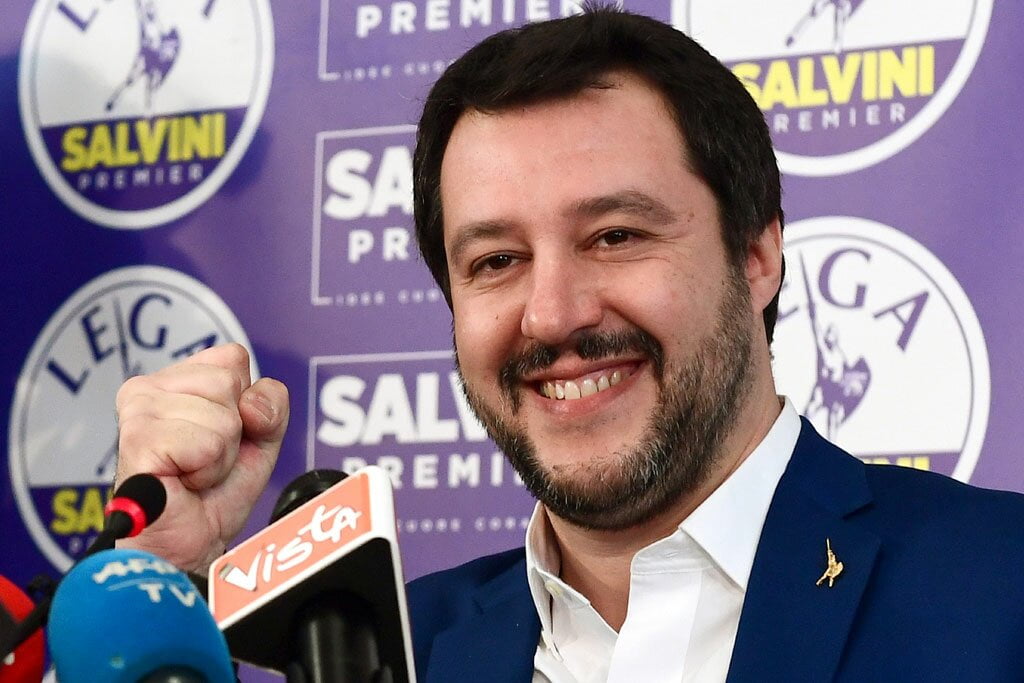
The result represents an unprecedented victory for the right-wing League party, led by Italy's deputy prime minister and interior minister, Matteo Salvini, in the south of the country.
Furthermore, the victory in the dispute for the government of Sardinia represents the fall of the last symbolic barrier that separated the right-wing League party from becoming the main political force in Italy.
The 5 Star Movement (M5S), which is part of the coalition that governs Italy together with the League, is the big loser in the local election, with just 11% of the votes.
The Supreme Court reaffirmed: citizenship is born with the person.
- New legal front opened
- Processes can still be filed.
- Individual assessment before any decision.
The confirmation of the party's deterioration was minimized by Italian Prime Minister Giuseppe Conte, who asked that the election not be “emphasized”.
Former Prime Minister Silvio Berlusconi once again spoke about the possibility of resuming the coalition with Salvini and the Brothers of Italy party, reported the ANSA agency.
Source
The League emerged in 1989, then as the “Northern League”, with the aim of achieving the independence of Padania, a rich and industrialized plain located in northern Italy. Salvini has been a member of the party since 1990, but, after becoming federal secretary in 2013, he promoted a drift towards the extreme right, abandoned the separatist flag and catapulted his electoral capital.
The culmination of this strategy came at the beginning of 2018, when the current minister removed the word “North” from all party symbols and obtained 17% of the votes in the legislative elections. The result authorized the party to form an occasional alliance with the anti-system 5 Star Movement (M5S), which has governed the country for almost nine months.
Since then, Salvini has been collecting electoral victories: the League already governed Lombardy and Veneto, but also conquered the Friuli Venice Giulia region and the autonomous province of Trento. Furthermore, it is part of government coalitions in the regions of Abruzzo, Liguria, Molise and Sicily and in the autonomous province of Bolzano.