


















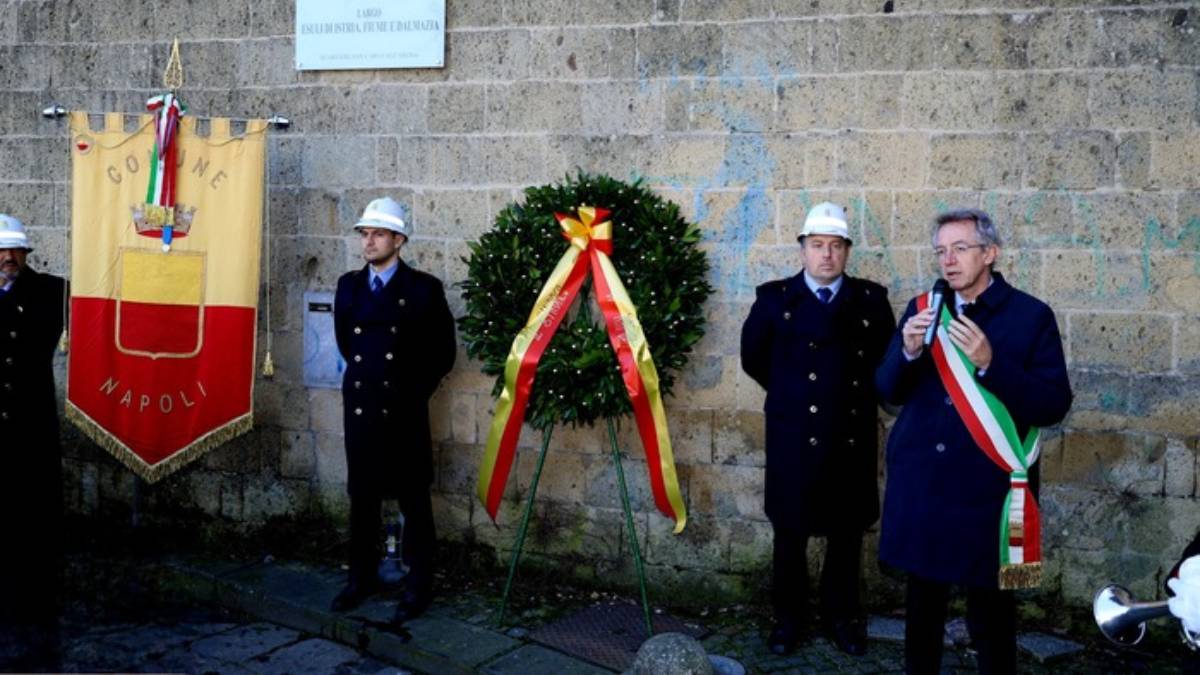
Italy remembers this Monday (10) the Foibe Massacre, one of the most tragic episodes related to the period following the Second World War in the country.
After the end of the conflict, thousands of people who opposed the annexation of part of the Venezia Giulia region by the then communist Yugoslavia were murdered by the regime of Marshal Josip Broz Tito.
The victims were thrown, dead or not, into holes formed by the action of water on the ground, called in Italy “foibe” – in the singular, “foiba”. Estimates indicate that between 5 and 17 Italians died in the persecution, with the majority living in the city of Trieste and the Croatian regions of Istria and Dalmatia.
The border dispute was only definitively resolved with a treaty signed in 1975. The massacre was long denied by the left, and Remembrance Day was only established in 2004, being celebrated annually on February 10.
“In the eastern border areas, after the fascist oppression, responsible for a segregationist policy against the Slavic populations, and the barbaric Nazi occupation, the communist dictatorship of Tito was established, inaugurating a relentless season of violence against Italians residing in these areas,” said the President of Italy, Sergio Mattarella, at a ceremony in the Quirinale Palace in Rome. According to the head of state, the Day of Remembrance “contributed to reconnecting that tragic and neglected chapter to Italian history.”
“For too long, 'foiba' has been synonymous with hiding history,” he added.
Prime Minister Giorgia Meloni said that remembering this tragedy is a “duty of truth and justice to honor those who suffered and pass on this memory to future generations.” “It is a story that has defeated the conspiracy of silence and that no attempt by deniers will be able to hide again,” she stressed.
Last Saturday (8), the “foiba” of Basovizza, which houses a monument to Italians killed at the hands of communist Yugoslavia, was vandalized with phrases such as “Trieste is ours” and “Trieste is a well”, written in Slovenian. The episode occurred on the same day that neighboring Gorizia, in Italy, and Nova Gorica, in Slovenia, began their joint mandate as European capital of culture in 2025.
“No provocation can diminish the memory,” Mattarella assured. (HANDLE)