






























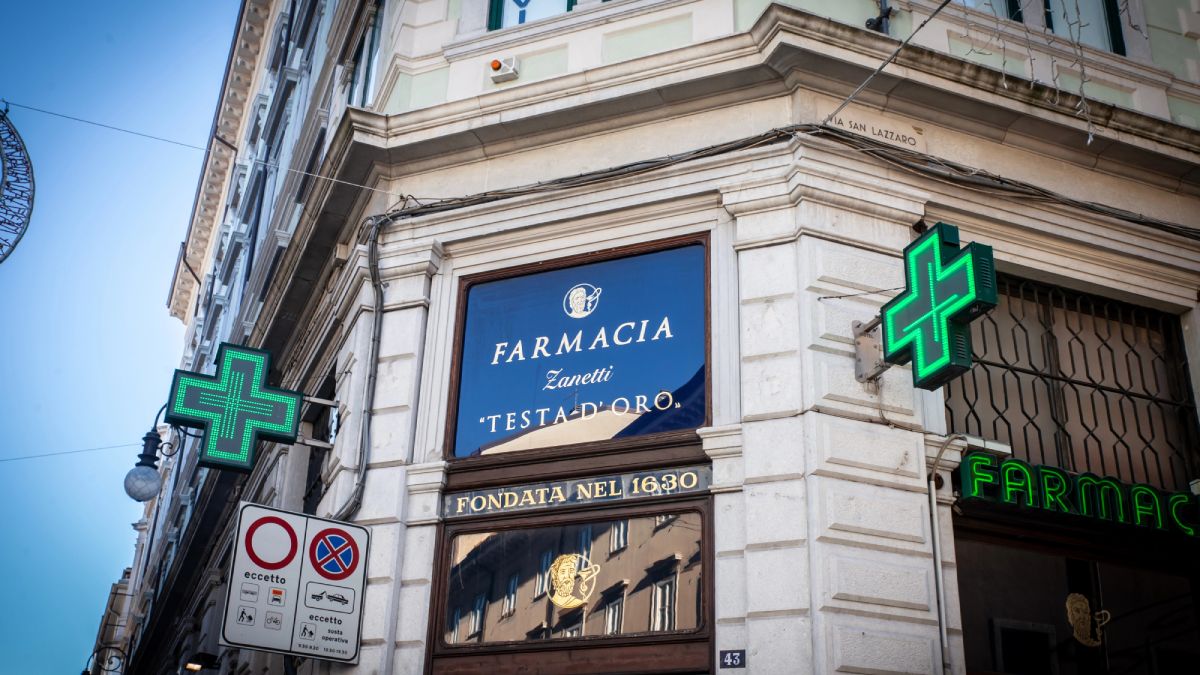
From administering vaccines to piercing ears, Italian pharmacies (pharmacies) are among the most useful establishments in the country. But they can also be unusual places.
In Italy, pharmacies aren't just places to sell prescription and over-the-counter medications. Customers can find everything from natural remedies, health supplies, and personal care products to basic medical services.
It is possible, for example, to measure blood pressure, get vaccines such as the flu vaccine and, in some units, even perform simple procedures such as ear piercings.
Despite their usefulness, Italian pharmacies follow their own logic, with unwritten rules and local traditions that can be confusing for those new to the country.
1 – Decipher your doctor’s scribbles before your visit
Just like in Brazil, many Italian doctors still write prescriptions by hand — and in handwriting that is difficult to understand.
We may never know why so many doctors insist on writing as if in hieroglyphics. But these scrawls certainly make it difficult to find the right medication.
To avoid problems, be sure to read what was prescribed. If in doubt, contact your doctor and ask them to repeat it or write it down legibly.
Don't count on the pharmacist to decipher the prescription. Often, he doesn't even know what's written — and he won't take any chances.
2 – Double-check the opening hours
If you come from Brazil, where pharmacies are open from 8am to 22pm or even 24 hours a day, know that in Italy the logic is different.
In big cities, most close until 20:30 during the week and remains closed on Saturdays or Sundays.
In small towns and villages, business hours tend to be two-shift on weekdays: from From 9 to 12 and 15:30 pm - 19:30 pm. On weekends, many do not open.
Before you leave, check the schedule online. If you can't find it, call the pharmacyAn uncomfortable call is still better than a futile visit.
But don't worry: there's always a pharmacy on duty (pharmacy on duty) working on a rotating basis. Even if the doors are closed, emergency care is guaranteed.
To find the nearest one, check the sign displayed in the window of any pharmacy in the city or visit the pharmacy website. Fedefarma (www.federfarma.it).

3 – Take the number
In many Italian pharmacies, service is organized by a ticket machine.
Right at the entrance, look for the dispenser and take your numbered ticket — the famous number. Then, wait to be called to go to the counter.
Approaching without a password is frowned upon. In some regions, there is a kind of “moral law” that prohibits customers from coming within five meters of the counter without number.
Anyone who tries to break this rule runs the risk of receiving disapproving looks from the locals.
4 – Conversations are part of the experience: embrace it
Pharmacies in Italy are not just places of care. They are living spaces, where residents take advantage of the wait to chat.
In times of long lines and slow service, many customers take the opportunity to chat. And this happens even among strangers.
You might think that because you're a foreigner or don't speak the language well, no one will start a conversation. But it's the opposite: Italians love to talk.
Even if you're not a fan of chatting, this exchange can help improve your Italian. And it also creates bonds with the local community.
5 – “Vuoi scaricarlo?”
At the end of the consultation, when everything seems resolved, the pharmacist may ask an unexpected question: “Vuoi scaricarlo?”
Literally translated, it means "do you want to download this?" Which, out of context, makes no sense at all.
In practice, the professional is asking if you want link the purchase to your fiscal Code — the Italian CPF.
This operation allows residents declare health expenses in the annual income tax (tax return) and have tax discounts.
If you have fiscal Code If you want to deduct these costs, answer "yes." Otherwise—for example, if you are a tourist—simply say "no."