























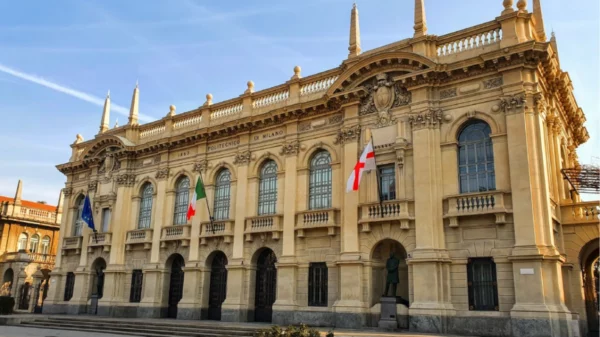

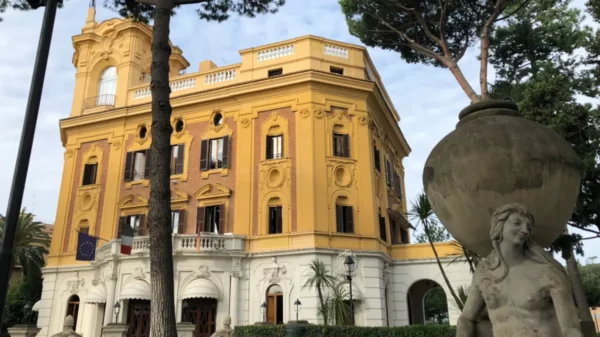

At a recent conference in Rome, the Italian Ministry of Foreign Affairs, in collaboration with the Italo-Latin American International Organization (IILA), promoted and reaffirmed the idea of "Italy, Latin America and the Caribbean: together for growth".
The objective, according to the Italian government, would be to "value the historical, cultural, and economic connections" between the country and the region through ties "strengthened with great effort in recent years between Italy and these countries, and to look together to the future." This plan to foster links and, especially, Italian exports to Latin American countries reflects intriguing and, at the same time, complex facets of contemporary Italian politics.
On one hand, there is an emphasis on Cultural Diplomacy, understood as the strategic use of culture to reposition Italy as a symbolic, economic, and political bridge between Europe and Latin America, strengthening historical ties and projecting the country's image on the international stage.
The economic data presented by the Ministry are significant and justify encouraging this "growing partnership" in the region. In 2024, trade between Italy and Latin American countries reached 33 billion euros, of which almost 21 billion correspond to Italian exports. Furthermore, there are currently more than 3 active Italian companies in the region, employing almost 20 people and generating a turnover of 70 billion euros. [1]
This initiative demonstrates a geopolitical soft power strategy that makes Italian culture an instrument of influence and symbolic capital, leveraging its historical, cultural, and, above all, economic connections. Culture, which shapes values, behaviors, and collective narratives, is represented in Italian design, fashion, gastronomy, and cultural heritage, creating virtuous circuits of commercial exchange.
Another relevant point is that such data also harbors a further intangible asset of great strategic value: the cultural memory perpetuated through the communities of descendants formed by the Italian diaspora established in Latin America since the 19th century.
Between 1870 and 1920 alone, it is estimated that around 1,4 million Italians arrived by ship on the Brazilian coast, a number that corresponds to approximately 42% of the total of 3,3 million people of Italian descent in the world during that period. [2]

These numbers speak for themselves about the importance of this history and the influence of this community on Brazilian society. It is a living sociocultural fabric that continues to reproduce values, work practices, languages, and forms of sociability that keep Italy present in the imagination and daily lives of millions of people in Latin America.
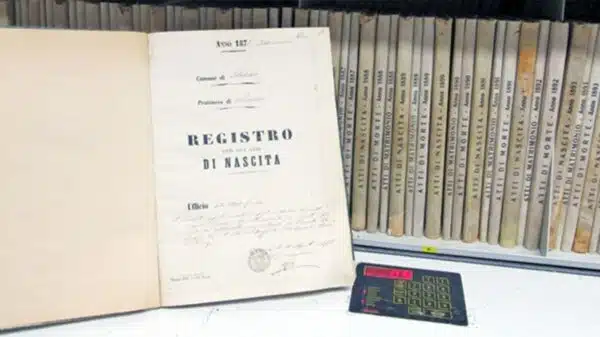
Despite this, the Italian government seems not to fully value this asset, underestimating that diaspora communities are an important cultural, relational, and economic link between Italy and the region. So much so that, in recent years, through decrees, laws, and regulations (such as the "decree of shame," Decree-Law 36/2025, converted into Law 74/2025), Italian policy has been persistently undermining and restricting one of the strongest ties of this cultural heritage: Italian citizenship. juris sanguinis.
The "right of blood," a principle in the Italian legal system that stipulates that Italian nationality can be transmitted through ancestry without generational limits, regardless of the place of birth, has become, for this community, a symbol of disrespect towards their ancestors.
With a policy marked by contradictions, the Italian government, on the one hand, seeks to promote transnational cultural cohesion and stimulate "partnerships for mutual growth," strengthening new economic ties of cooperation in Latin America. [3]
On the other hand, it imposes rules that restrict the rights of the descendants of those "millions of Italians who, driven by hope, courage and ingenuity," crossed the ocean from the first half of the 19th century in search of a better life overseas. [4]

Recognizing Italian-Latin American communities as active subjects of foreign cultural policy, transforming the memory of migration into a living heritage of transnational cooperation and belonging, is the first step towards creating true cultural diplomacy. For, valuing Italy's role in Latin America and the Caribbean is not merely a matter of trade or energy, but above all, a matter of recognizing shared identity and mutual respect.

Notes:
[2] CORTESE, A. Italian Immigration in Brazil, 150 years. Book available at: https://ambbrasilia.esteri.it/wp-content/uploads/2025/03/150-anos-Imigracao-Italiana_compressed-2.pdf.
FOLLOW-US